

You’re mid-conversation, everything feels normal, and then it lands: “fym?”
No punctuation. No context. Just three lowercase letters sitting there like a challenge.
If you’ve ever stared at your phone trying to figure out whether you’re in trouble or just being asked a question, you’re not alone. The FYM meaning in text isn’t complicated once you know it — but the tone behind it is where almost everyone gets tripped up, and that’s the part most guides skip completely.
Let’s actually fix that.
What Does FYM Mean In Texting?
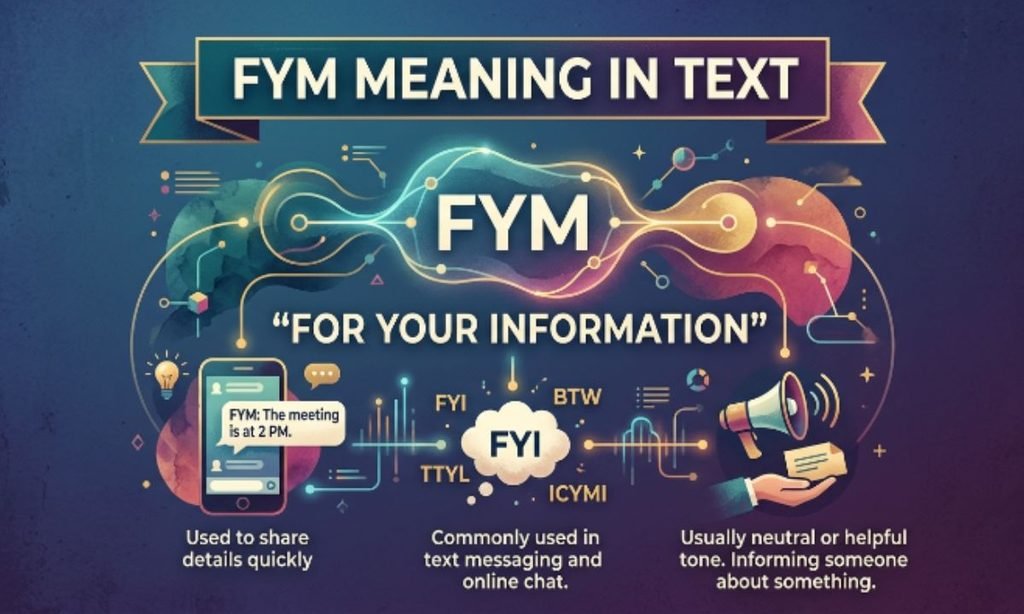
FYM stands for “F* You Mean”** (or the softer version people type it as, “For You Mean”). It’s a blunt, faster, more charged way of asking someone to clarify what they just said — basically an amped-up cousin of “wym” (what you mean).
Think of it as the difference between asking a question and firing one back. “Wym” is curious. FYM has an edge to it, even when that edge is playful.
Here’s the quick version if you only remember one thing:
FYM = “what do you mean?” but said with attitude, confusion, humor, or all three at once.
The actual meaning behind FYM in a text almost never lives in the letters. It lives in everything around them — the punctuation, the reply time, the emoji (or lack of one). That’s the piece nobody breaks down properly, so we’re doing it below.
FYM Meaning By Context: A Quick Reference Table
Because the FYM meaning in text shifts so much depending on how it’s sent, a table works better than a paragraph here.
| How It’s Sent | Likely Meaning | Vibe |
| “fym” (lowercase, no punctuation) | Genuine confusion, low energy | Neutral to curious |
| “FYM??” (caps, multiple question marks) | Shock, disbelief, or mild offense | High energy, defensive |
| “fym 😭” | Playful disbelief, teasing | Friendly, joking |
| “FYM.” (period at the end) | Flat annoyance or sarcasm | Cold, closed-off |
| “fym lol” | Light confusion, no real tension | Relaxed |
| “wait fym” | Genuinely caught off guard | Honest surprise |
That table alone solves more confusion than most people expect. Punctuation is doing 80% of the emotional work in a text this short.
Where FYM Actually Came From
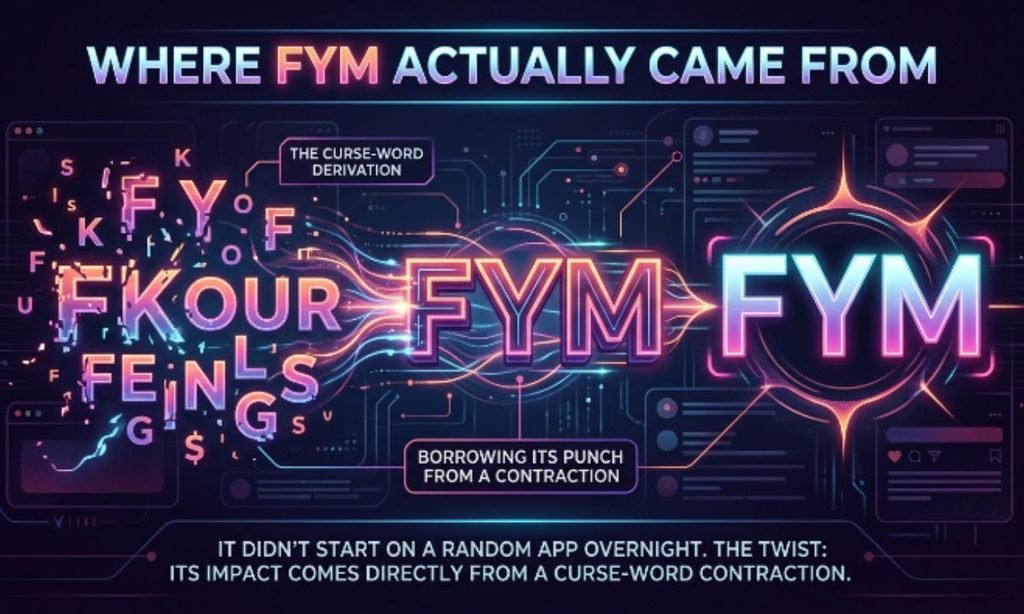
FYM didn’t start on a random app overnight. It grew out of the same texting shorthand culture that gave us “wyd,” “hbu,” and “idk” — abbreviations built for speed, not grammar.
The twist with FYM is that it borrows its punch from a curse-word contraction, similar to how “stfu” or “tf” work. People wanted a version of “what do you mean” that could carry frustration, sarcasm, or shock in three letters instead of a full sentence. FYM filled that gap.
It picked up steam through group chats and comment sections before spreading to DMs, gaming chat, and short-form video captions — the usual path most slang takes these days.
The Part Everyone Gets Wrong: Reading Tone Correctly
This is the actual content gap. Most explanations stop at “it means what do you mean” and move on. That’s only half the answer, and it’s the half that gets people in trouble.
Here’s a simple three-question check to run before you reply to an FYM text:
- Did they reply instantly, or after a pause? Instant replies usually mean genuine surprise. A delayed “fym” often means they reread your message and got annoyed.
- Is there an emoji softening it? A 😭, 💀, or 😂 attached to FYM almost always means it’s playful. No emoji at all, especially with a period, tends to read colder.
- Does it match the rest of the conversation’s energy? If you two have been joking around, FYM is a joke too. If the conversation had already gotten tense, FYM is probably not lighthearted.
Skipping this step is exactly why people either overreact to a harmless joke or completely miss that someone’s actually annoyed with them.
FYM In Real Conversations (So You Can See The Difference)
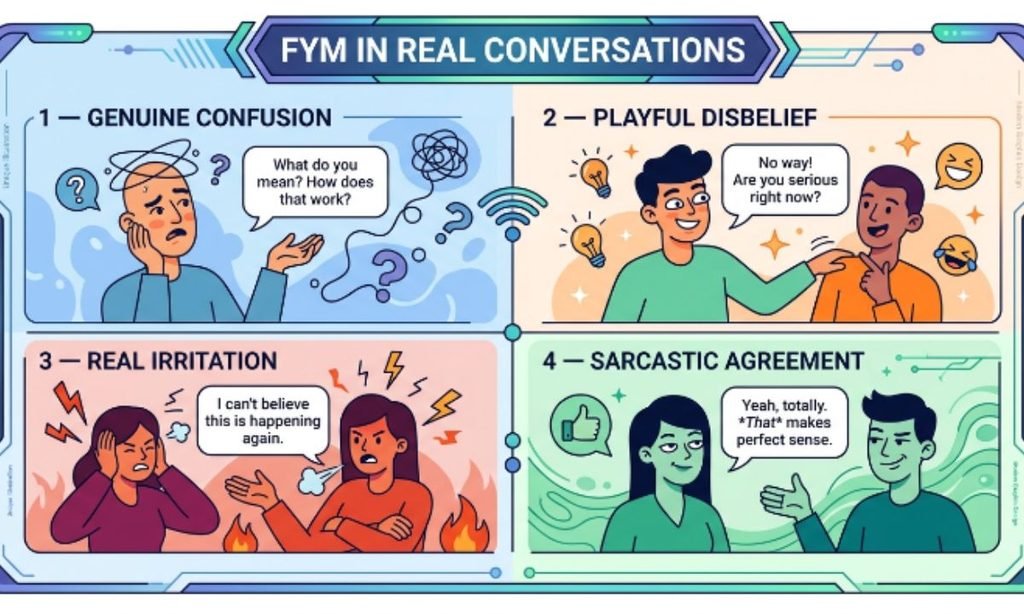
Reading about tone is one thing. Seeing it play out is another. Here are four short exchanges that show how wildly the FYM meaning in text can shift depending on what surrounds it.
Example 1 — Genuine confusion
A: “I’m not coming tonight, something came up with the thing” B: “fym something came up”
Nothing aggressive here. B just needs actual details. Reply with the info and move on.
Example 2 — Playful disbelief
A: “I ran a mile today” B: “FYM 😭😭 you hate running”
This is a joke, not a callout. A can laugh it off or double down: “I know, shocking.”
Example 3 — Real irritation
A: “you said you’d help me move and then just left” B: “FYM.”
Short, capped, no emoji, period at the end. This is not playful. This needs an actual apology, not a joke reply.
Example 4 — Sarcastic agreement
A: “this movie was so bad it was good” B: “fym it was so bad it was good, explain that logic”
Curious sarcasm, not anger. B is engaging, not attacking.
Notice the pattern: the words “fym” barely change, but the meaning behind FYM in each text swings from confused, to teasing, to hurt, to sarcastic — all based on formatting and context, never the letters themselves.
Which Platforms Use FYM Most (And Why It Reads Differently On Each)
The FYM meaning in text doesn’t change platform to platform, but how often you’ll see it — and how it’s typically styled — does shift a bit.
| Platform | How Common | Typical Style |
| iMessage / SMS | Very common | Lowercase, minimal punctuation |
| Instagram DMs | Very common | Often paired with emoji reactions |
| Snapchat | Common | Short, fast, disappears quickly so tone matters more |
| Discord | Common | Frequently capitalized for emphasis in gaming chats |
| Twitter/X replies | Common | Public, so often more sarcastic or performative |
| TikTok comments | Common | Used as a reaction to a caption or clip, not a person |
That last row matters more than people realize. When FYM shows up under a video instead of in a private chat, it’s almost never confrontational — it’s just a comment reacting to something surprising in the content itself.
Why Autocorrect, Parents, and Non-Native Speakers Get Tripped Up By FYM
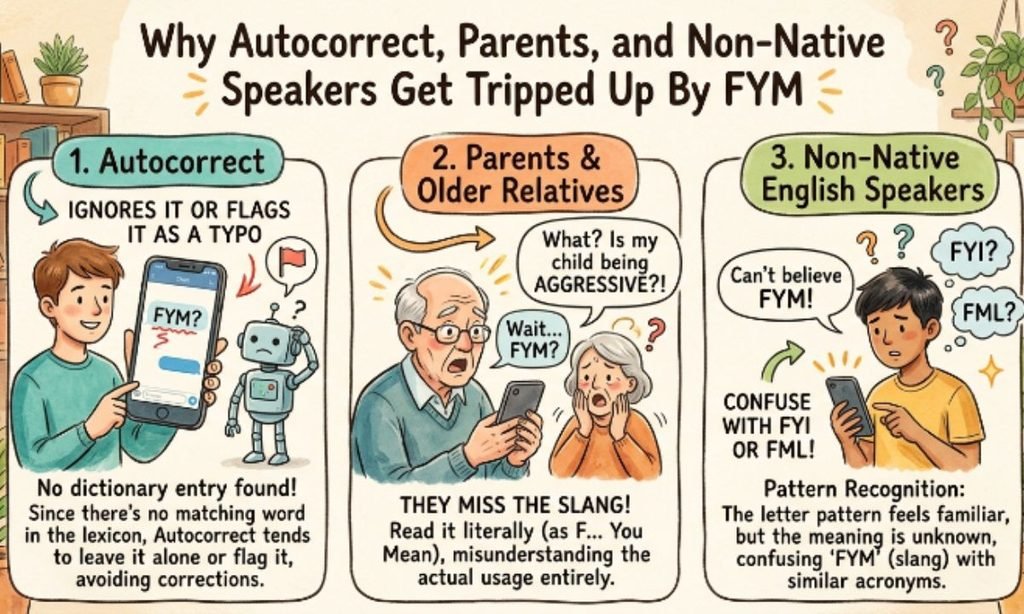
If you’ve ever sent FYM and had autocorrect mangle it into something unrelated, that’s not a glitch — most phone dictionaries simply don’t recognize it as a real word, since it’s a contraction of a phrase, not a standalone term.
This also explains why FYM causes so much confusion outside of younger, native-English texting circles:
- Autocorrect tends to leave it alone or flag it as a typo, since there’s no dictionary entry to match against.
- Parents and older relatives often read it literally, missing the “what do you mean” function entirely and assuming it’s just aggressive.
- Non-native English speakers frequently confuse FYM with similar-looking abbreviations like FYI or FML, since the letter pattern feels familiar even though the meaning isn’t.
If you’re texting someone outside your usual slang circle, it’s worth spelling it out — “what do you mean” — rather than assuming the FYM meaning in text will land the way you intend.
FYM vs. Similar Texting Terms
FYM sits in a small family of “explain yourself” texting slang. Here’s how they compare side by side.
| Term | Meaning | Intensity Level |
| WYM | What you mean | Low |
| FYM | F*** you mean | High |
| HYD | How you doing | Not related, often confused |
| TF | The f*** | Medium-high, standalone reaction |
| SAY LESS | I understand, no need to explain | Opposite function |
| FR | For real | Agreement, not confusion |
Notice FYM and TF often get used almost interchangeably (“tf you mean” vs. “fym”), but FYM specifically wraps the confusion and the reaction into one word, while TF is usually its own standalone outburst.
How To Reply To FYM (Without Overthinking It)
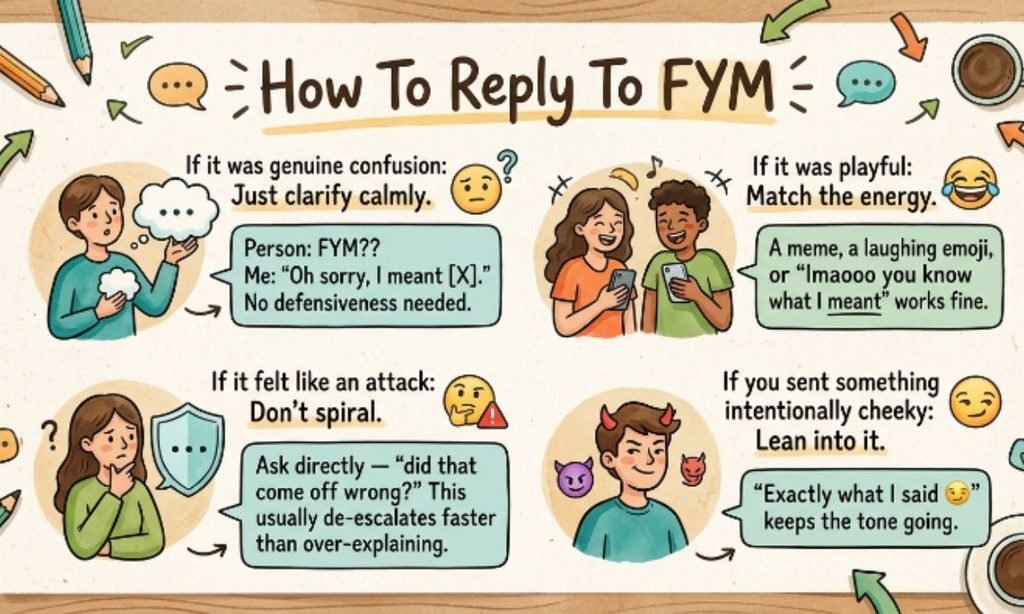
Once you’ve read the tone correctly, replying gets easy. Here’s a practical breakdown based on what triggered the FYM in the first place:
- If it was genuine confusion: Just clarify calmly. “Oh sorry, I meant [X].” No defensiveness needed.
- If it was playful: Match the energy. A meme, a laughing emoji, or “lmaooo you know what I meant” works fine.
- If it felt like an attack: Don’t spiral. Ask directly — “did that come off wrong?” This usually de-escalates faster than over-explaining.
- If you sent something intentionally cheeky: Lean into it. “Exactly what I said 😏” keeps the tone going.
The biggest mistake people make is treating every FYM like a confrontation. Most of the time, it’s just texting shorthand doing its job — asking for clarity fast.
Other Meanings People Attach To FYM
Texting slang rarely stays locked to one meaning forever, and FYM has picked up a few side uses worth knowing:
- “For Your Motivation” — occasionally used in fitness or hustle-culture captions, unrelated to the confrontational version.
- “Free Your Mind” — shows up in more spiritual or self-help style posts, again with zero connection to the texting version.
- A joking stand-in for “f* your mama”** — rare, mostly used as a diss-track style joke among friends, not meant literally.
These alternate meanings are far less common than the “what do you mean” usage, but if FYM shows up in a caption instead of a direct reply, context should tip you off immediately.
Final Thoughts
The FYM meaning in text is simple on the surface — it’s just a rougher way of asking “what do you mean?” But the real skill is in reading what’s sitting around those three letters. Once you get comfortable checking punctuation, emoji, and timing, you’ll stop misreading friendly texts as attacks, and you’ll actually catch it when someone’s genuinely annoyed.
That’s the whole game with slang like this. It’s never really about the letters. It’s about everything surrounding them.
FAQs
Is FYM always rude?
No. On its own, FYM is neutral slang. Whether it reads as rude depends entirely on punctuation, emoji, and the conversation’s existing tone.
What’s the difference between FYM and WYM?
WYM (“what you mean”) is a calmer, more neutral ask. FYM carries more attitude or emotional charge, even in playful contexts.
Can FYM be used in a good way?
Yes. Among friends, FYM often shows up as a teasing reaction to something funny or unexpected, not as an insult.
How do I know if someone’s mad when they text FYM?
Check for caps lock, missing emoji, a period at the end, or a delayed response. Those signals usually point to real irritation rather than a joke.
Is FYM the same in every messaging app?
The core meaning stays consistent across texting, Instagram DMs, Snapchat, and Discord. Tone-reading rules apply the same way everywhere.
Should I spell out “what do you mean” instead of texting FYM?
With close friends, no — FYM works fine and actually reads faster. With parents, coworkers, or anyone outside your usual texting circle, spelling it out avoids the mixed signals FYM can send.
Does FYM ever mean something other than “what do you mean”?
Rarely, it shows up as “For Your Motivation” or “Free Your Mind” in captions rather than replies, but this is uncommon compared to the confrontational or curious version used in everyday texts.
