
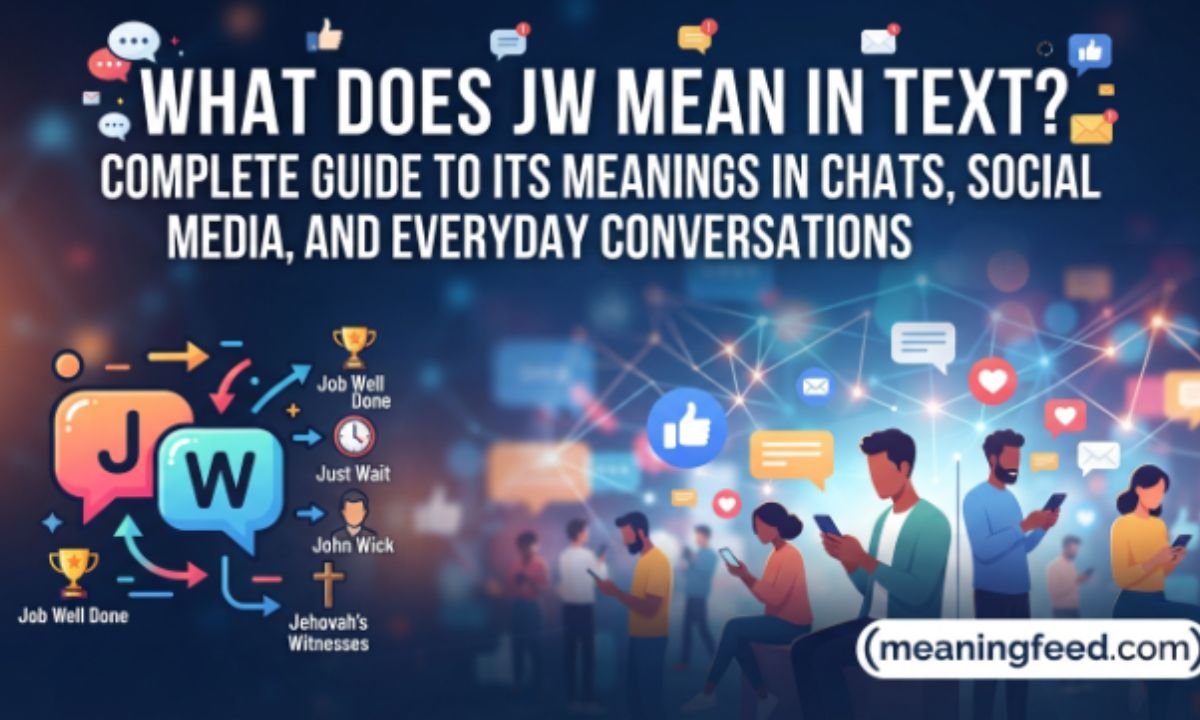

Someone just texted you “jw, are we still on for tonight?” and now you’re squinting at your phone like it owes you an explanation.
You’re not alone. So what does JW mean in text? Ninety-five percent of the time, it stands for “Just Wondering.” It’s one of those small abbreviations that quietly took over group chats, DMs, and comment sections without anyone officially announcing it. But like a lot of texting slang, JW has a couple of other lives depending on who’s typing it and what they’re talking about.
Let’s clear the whole thing up, meaning, tone, examples, and the moments where it actually means something else entirely.
What Does JW Mean in Text? The Short Answer
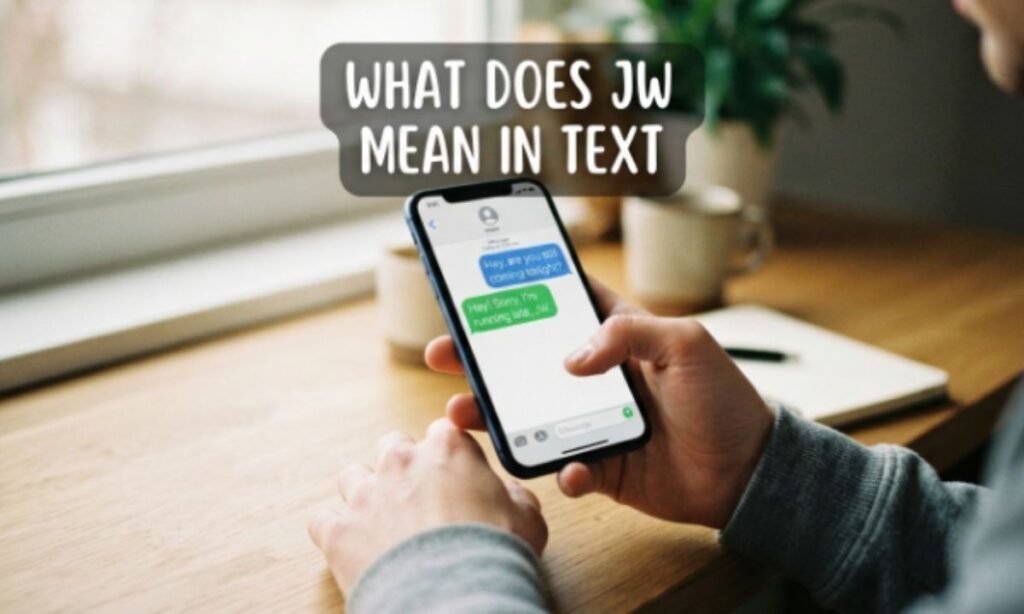
In everyday texting, JW = Just Wondering.
It’s a low-pressure way to ask a question. Instead of firing off something that sounds like an interrogation, people tack on “jw” to soften it. It basically tells the other person: relax, this isn’t a big deal, I’m just curious.
A few real-world examples:
- “JW, did you end up calling her back?”
- “You never posted the pics from the trip. JW what happened lol”
- “JW if you’re still coming or should I save you a seat”
Notice the pattern? None of these feel demanding. That’s the entire job of the phrase.
Where JW Comes From
Texting abbreviations like JW didn’t appear out of nowhere. They grew out of the early SMS era, when every message was capped at 160 characters and people needed to say more with less. Terms like LOL, BRB, and IMO all came out of that same pressure cooker.
“Just wondering” has been a normal part of spoken English for decades. Someone shortened it, it caught on in texting and instant messaging, and it eventually made the jump to social platforms like Instagram, Snapchat, and TikTok. Nothing mysterious — just language doing what language does when speed matters more than formality.
The Different Meanings of JW (Context Changes Everything)

Here’s where a lot of people get tripped up. JW isn’t a one-trick abbreviation. The meaning shifts depending on the conversation happening around it.
| Meaning | Where You’ll See It | How Common |
| Just Wondering | Texts, group chats, social media comments | Very common (default meaning) |
| Jehovah’s Witness | Religious discussions, forums, community posts | Common in specific context |
| Just Wait | Rarely used this way, often confused with JW | Uncommon, usually a misread |
| Job Well Done (workplace shorthand) | Some professional or gaming chats | Niche, situational |
The golden rule: if the conversation has nothing to do with religion or a specialized topic, JW almost always means “just wondering.” Context is doing 90% of the interpretation work here, not the letters themselves.
When JW Means Jehovah’s Witness
If someone’s talking about door-to-door ministry, Bible study groups, or religious congregations, JW is shorthand for Jehovah’s Witness, referring to a member of that faith. You’ll see this most in religious forums, community threads, or conversations specifically about beliefs and denominations.
The tell is simple: is the topic already religious? If yes, JW probably isn’t about curiosity at all.
How JW Is Used in Real Conversations
JW shows up in a few pretty predictable ways once you start noticing it. Here’s how people actually use it day to day.
1. Softening a Question
Nobody wants to sound like they’re grilling someone over text. Adding JW takes the edge off.
“JW, why’d you leave the group chat?”
Same question, way less confrontational than just “why did you leave the group chat.”
2. Checking In Casually
Perfect for those low-stakes follow-ups where you don’t want to seem pushy.
“Haven’t heard from you in a while. JW how the new job’s going.”
3. Asking Something Slightly Personal or Sensitive
This is where tone really matters. JW can genuinely soften a touchy question, or it can come off cold, depending on the relationship and the situation.
“Are we good? JW.”
That one can land as caring or dismissive. It depends entirely on the history between the two people texting.
4. Following Up Without Pressure
“Any update on the plans for Saturday? JW”
This keeps things light while still nudging for an answer.
Does JW Ever Sound Rude or Passive-Aggressive?
Sometimes, yes. And this is honestly the part people search for most.
JW itself isn’t sarcastic. It’s neutral. But tone from the rest of the message, punctuation, and timing can turn it into something sharper.
Compare these two:
- “JW, are you mad at me?” — reads as genuinely curious
- “JW. Are you mad at me.” — reads a lot colder, almost accusatory
The abbreviation doesn’t carry attitude on its own. The sentence around it does all the emotional lifting. That’s true of most texting slang, honestly — punctuation and context decide the mood more than the actual letters.
Common Mistakes People Make With JW
A few things worth knowing before you start dropping it into every text:
- Confusing it with “just wait.” These aren’t interchangeable, and mixing them up leads to genuinely confusing replies.
- Overusing it. If every single message you send starts with JW, it stops sounding casual and starts sounding like a verbal tic.
- Using it in emotionally heavy conversations. If someone’s upset, hurt, or venting, tossing in JW can feel dismissive, even if that’s not the intent.
- Assuming the recipient knows it. Not everyone is fluent in texting shorthand. Older relatives, coworkers, or people outside your usual friend group might just see two random letters.
JW vs. Other Similar Texting Abbreviations
It helps to see JW next to a few lookalikes so the difference actually sticks.
| Abbreviation | Meaning | Typical Use |
| JW | Just Wondering | Softening a casual question |
| IDK | I Don’t Know | Admitting uncertainty |
| FYI | For Your Information | Sharing info, not asking |
| TBH | To Be Honest | Introducing an honest opinion |
| NVM | Never Mind | Withdrawing a question or comment |
The easiest way to remember it: JW opens a question. The others mostly close one, share information, or express an opinion. That distinction is what makes JW genuinely useful — there’s not really another abbreviation that does exactly the same job.
Where You’ll See JW Most Often
Not every platform uses texting slang the same way. JW tends to show up most in:
- Group texts and iMessage threads
- Instagram and Snapchat DMs
- TikTok and Instagram comment sections
- Dating apps, where it softens questions that might otherwise feel too forward
On dating apps specifically, JW gets used a lot to ask something slightly personal without seeming intense right out of the gate — things like “JW, are you seeing anyone else on here” or “JW what made you swipe.”
How to Respond When Someone Texts You JW
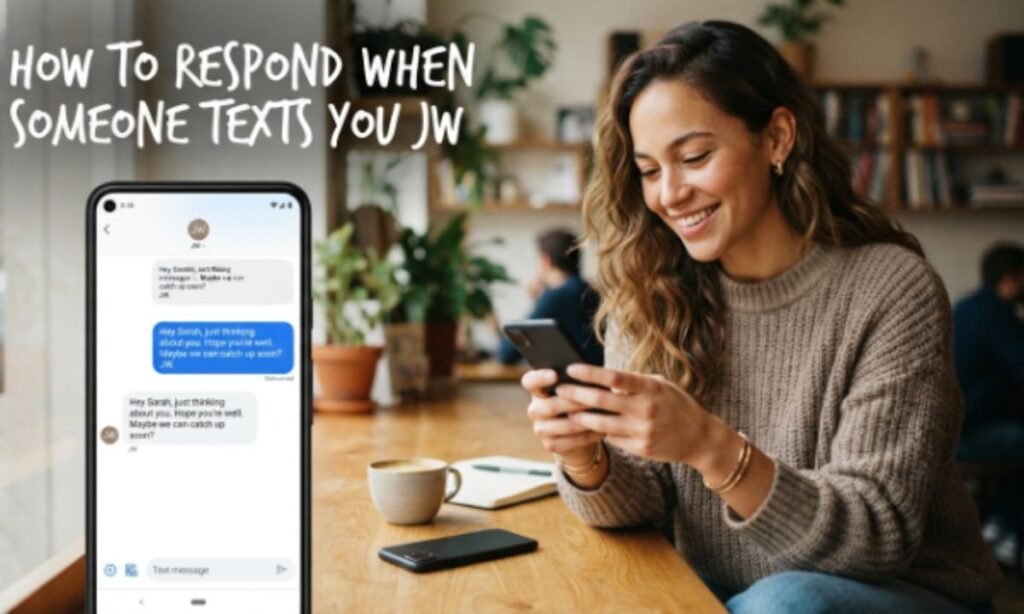
There’s no special trick here. Just answer the actual question that follows JW, and match the tone.
- If the message is light and casual, keep your reply casual too.
- If the JW question feels like it’s fishing for something deeper, a straightforward answer usually works better than deflecting.
- If you genuinely can’t tell what someone means (Jehovah’s Witness vs. just curious), it’s completely fine to ask. “Wait, what do you mean by JW here?” isn’t awkward, it’s just clarifying.
A Quick Note on Regional and Generational Differences
JW usage isn’t perfectly uniform. In everyday American texting, it’s extremely common and rarely needs explaining. In the UK, people are somewhat more likely to just spell out “just wondering” rather than abbreviate it. And within the US itself, there’s a bit of a generational split — Gen Z tends to use it automatically, while some older millennials and Gen X texters miss it or need a second to place it.
None of this changes the core meaning. It’s more about how often you’ll actually run into it depending on who’s on the other end of the conversation.
Final Thoughts
At the end of the day, JW is one of the more polite pieces of texting shorthand out there. It exists to take the edge off a question, not to add confusion. Ninety-five times out of a hundred, if someone texts you JW, they’re just being genuinely curious and trying not to sound demanding about it.
Keep an eye on context, though. If religion is already part of the conversation, JW is probably pointing to Jehovah’s Witness instead. And if a JW question ever feels like it’s landing wrong, it’s always fine to just ask what someone meant. Texting shorthand is supposed to make conversations easier, not more confusing, and a quick clarifying question fixes that in about two seconds.
Next time “jw” pops up in your messages, you’ll know exactly what’s being asked, and exactly how to read the tone behind it.
FAQ
What does JW mean in text from a girl or guy?
It means the same thing regardless of who’s sending it: “Just Wondering.” It’s a gender-neutral abbreviation used to ask a casual question without sounding too direct or pushy.
What does JW mean on Snapchat or Instagram?
On Snapchat and Instagram, JW almost always means “Just Wondering.” People use it in DMs and comments to ask something casually, like “JW why’d you unfollow lol.”
Is JW short for Jehovah’s Witness?
Yes, but only in religious contexts. If the conversation involves faith, ministry, or church topics, JW likely refers to a Jehovah’s Witness. In casual texting, it means “Just Wondering.”
What does JW mean in a flirty or dating context?
In dating app chats, JW usually softens a slightly personal question, such as “JW, are you talking to anyone else?” It keeps things light instead of feeling like an interrogation.
Is JW rude to use in a text?
Not inherently. JW is neutral on its own, but punctuation and tone can make it feel cold or sarcastic. Adding a friendly tone or emoji usually keeps it casual and warm.
What’s the difference between JW and IDK?
JW means “Just Wondering” and is used to ask a question. IDK means “I Don’t Know” and is used to answer one. They serve opposite purposes in a conversation.
Can JW mean something other than “Just Wondering”?
Yes. Besides Jehovah’s Witness, some people use JW loosely to mean “Just Wait,” though this is far less common and often causes confusion. Context always clarifies the intended meaning.
