

You’re texting a friend, they thank you for something small, and you type back “np.” Simple enough, right? But then you see it pop up in a work Slack message, a dating app chat, and even a comment on Reddit — and suddenly you’re wondering if it always means the same thing.
Here’s the short answer: NP mean in text is almost always “No Problem.” It’s one of the most common texting abbreviations out there, right up there with “lol” and “omw.” But like a lot of internet shorthand, the way it lands depends heavily on who’s sending it, where, and why.
Let’s break down exactly what NP means, when to use it, when to skip it, and how to avoid the awkward mix-ups that trip people up more often than you’d think.
What Does NP Mean in Text?
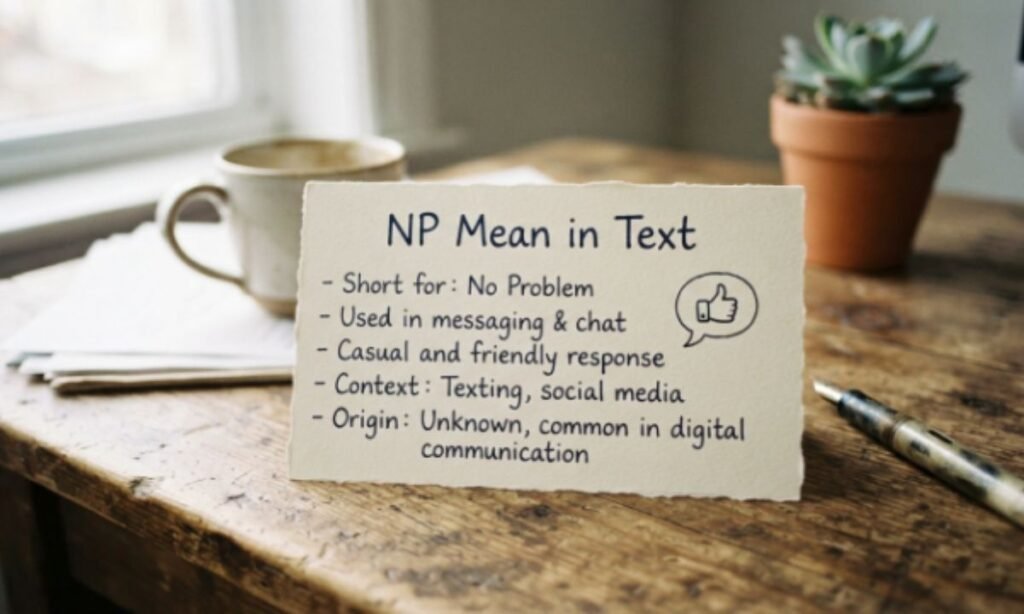
NP is short for No Problem. It’s a quick, casual way of saying “don’t worry about it” or “you’re welcome” after someone thanks you, apologizes, or asks for a small favor.
You’ll see it most often in these situations:
- Replying to a “thank you” text
- Responding to someone who apologizes for something minor
- Confirming that a request or change is totally fine
- Wrapping up a casual conversation on a light note
Here’s a quick real-world example:
Friend: Hey, sorry I’m running 10 minutes late! You: np, take your time
That single “np” carries a lot of meaning in two letters. It says: I’m not annoyed, this isn’t a big deal, and we’re good.
Where NP Came From
Like most texting abbreviations, NP grew out of early internet chat culture — think AOL Instant Messenger, IRC channels, and early online gaming communities back in the late ’90s and 2000s. Gamers especially leaned on short replies like “np,” “gg” (good game), and “brb” (be right back) because typing fast mattered more than typing formally.
As texting on phones took off, these same abbreviations carried over naturally. People were already used to trimming their language to save time, and NP fit right into that habit.
Other Meanings of NP (Context Matters)
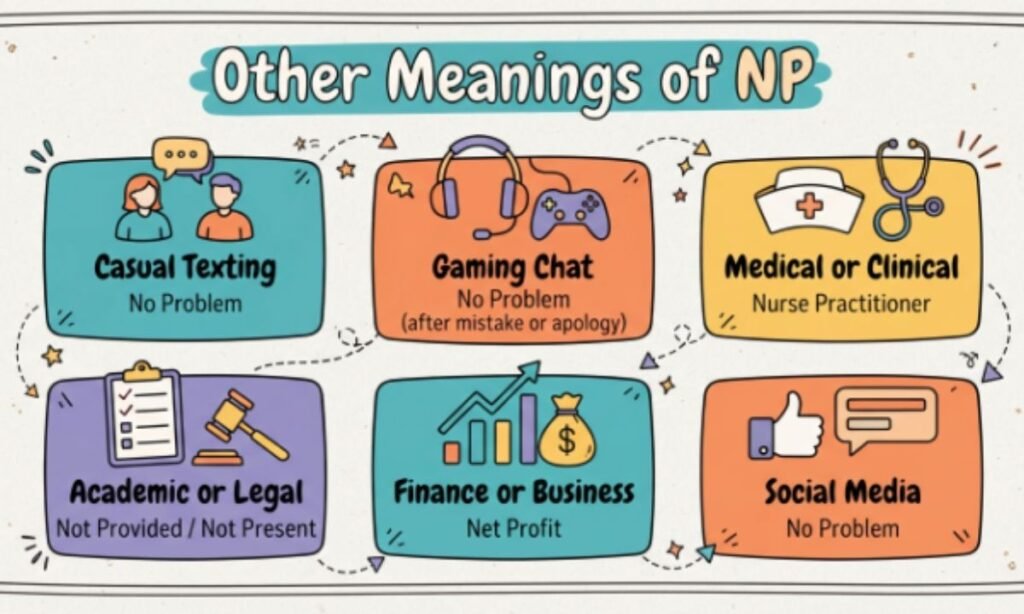
While “No Problem” covers the vast majority of cases, NP isn’t a one-trick abbreviation. The meaning can shift depending on the setting, so it’s worth knowing the alternatives before you assume.
| Context | What NP Likely Means |
| Casual texting | No Problem |
| Gaming chat | No Problem (often after a mistake or apology in-game) |
| Medical or clinical writing | Nurse Practitioner |
| Academic or legal documents | Not Provided / Not Present |
| Finance or business shorthand | Net Profit |
| Social media comments | No Problem |
| Programming/tech forums | Occasionally “Not Possible” |
This is exactly why context is everything. If your dentist’s office texts you “Please bring your ID, NP will review your chart,” they’re clearly talking about a Nurse Practitioner, not saying “no problem.” But if a coworker replies to your Slack message with “np!” after you thank them for covering a shift, it’s the casual meaning, no question.
How to Use NP the Right Way
Texting abbreviations are all about tone, and NP is no exception. Used well, it feels warm and easygoing. Used in the wrong spot, it can come across as dismissive or even a little cold.
Here’s a simple way to think about it:
When NP Works Well
- Texting friends or family
- Replying to casual coworkers on chat apps like Slack or Teams
- Responding to a thank-you for something small
- Group chats and light-hearted conversations
When to Think Twice
- Formal emails or client communication
- First-time conversations with someone you don’t know well
- Situations where the other person put in real effort and deserves a fuller response
- Professional settings where your tone needs to read as polished
A good rule of thumb: if you’d feel comfortable saying “no worries, all good” out loud in that exact conversation, then “np” is probably fine to type. If it feels too casual for the moment, it probably is.
NP vs. Similar Texting Abbreviations
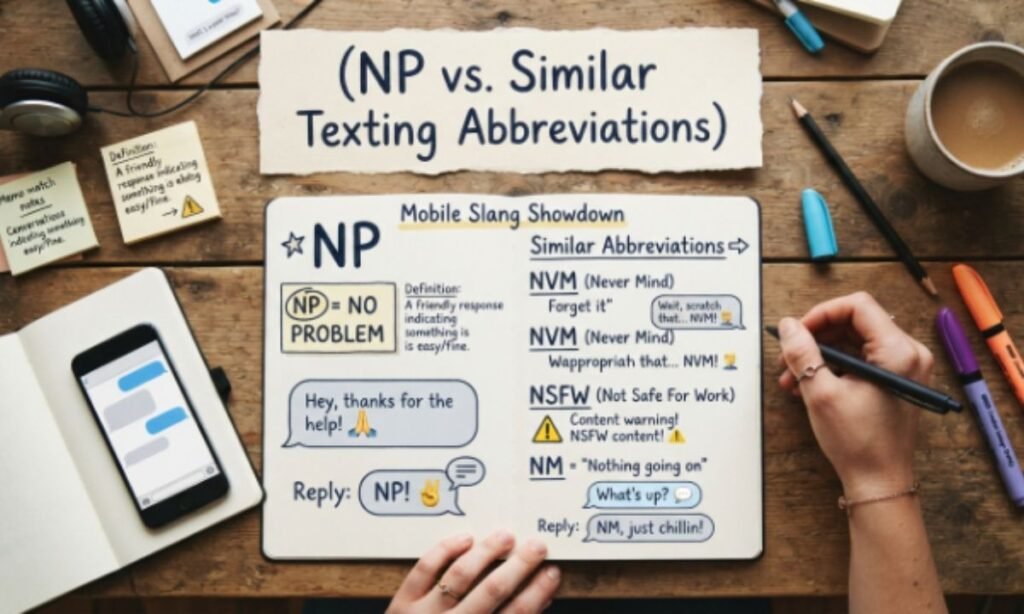
NP often gets grouped together with other short replies, but each one carries its own slightly different flavor. Mixing them up isn’t a huge deal, but knowing the difference helps you sound more natural.
| Abbreviation | Meaning | Typical Use |
| NP | No Problem | Reassuring someone after a thank-you or apology |
| YW | You’re Welcome | Direct response to “thank you” |
| NBD | No Big Deal | Downplaying something more casually than NP |
| IDC | I Don’t Care | Indifference, sometimes blunt |
| ATP | At This Point | Frustration or exasperation |
| NVM | Never Mind | Dropping a topic or canceling a request |
Notice how NP sits in a friendly, reassuring lane. It’s warmer than “IDC” and a bit more understated than “YW.” That’s part of why it’s stayed so popular — it hits a comfortable middle ground.
Is NP Rude or Unprofessional?
This question comes up a lot, especially from people newer to texting culture or those using it in work settings for the first time.
Short answer: NP itself isn’t rude. But context can make it feel that way.
If someone sends you a heartfelt thank-you message after you helped them through something stressful, replying with just “np” might feel a little flat, even if that’s not your intention. In those moments, a slightly longer response goes a long way:
- “Of course, anytime!”
- “Happy to help, seriously.”
- “No problem at all — let me know if you need anything else.”
On the flip side, for quick, low-stakes exchanges, “np” is perfectly appropriate and even expected. Overexplaining a simple thank-you can actually feel more awkward than just keeping it short.
NP in Professional and Workplace Chats
Workplace communication has loosened up a lot over the past decade, especially with tools like Slack, Microsoft Teams, and even text-based client updates becoming normal. Because of that, NP has crept into professional spaces where it used to feel out of place.
Here’s a general guideline for using it at work:
- Internal team chats — Totally fine, especially with coworkers you talk to daily.
- Client-facing messages — Use with caution. Spell it out as “No problem” if you’re unsure of the relationship.
- Formal emails — Avoid abbreviations altogether; stick to full sentences.
- New manager or executive conversations — Lean formal until you get a read on their communication style.
A lot of workplaces develop their own texting culture over time. If your team already uses “np” casually, you’re probably fine following suit. If you’re new somewhere and unsure, it never hurts to write it out in full for the first few weeks.
Common Mistakes People Make with NP
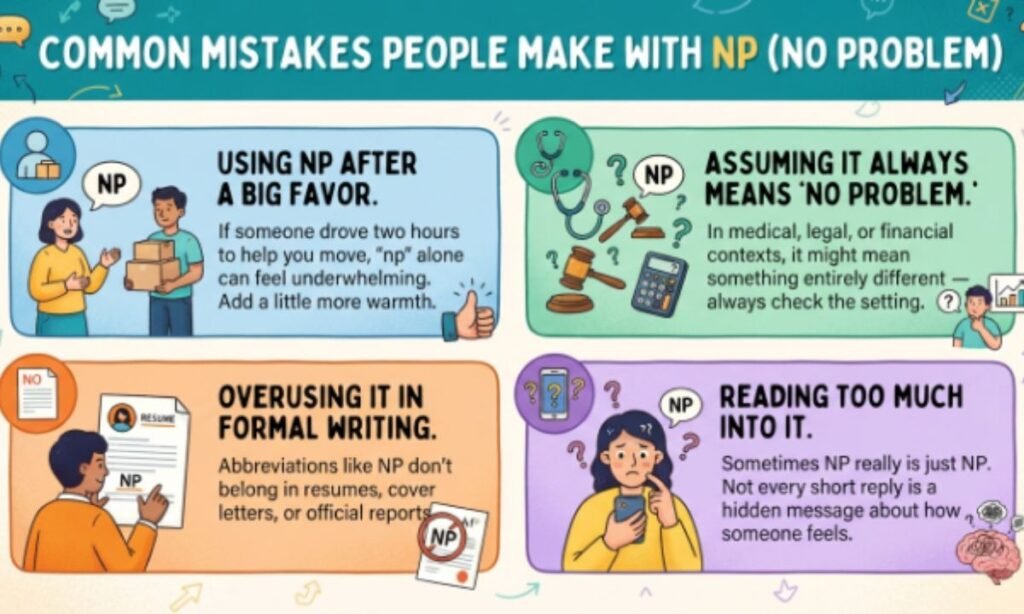
Even something as small as a two-letter abbreviation can go sideways. Here are a few slip-ups worth avoiding:
- Using NP after a big favor. If someone drove two hours to help you move, “np” alone can feel underwhelming. Add a little more warmth.
- Assuming it always means “No Problem.” In medical, legal, or financial contexts, it might mean something entirely different — always check the setting.
- Overusing it in formal writing. Abbreviations like NP don’t belong in resumes, cover letters, or official reports.
- Reading too much into it. Sometimes NP really is just NP. Not every short reply is a hidden message about how someone feels.
Quick Recap: What NP Means in Text
Here’s the whole thing boiled down:
- NP almost always means No Problem in everyday texting
- It can mean Nurse Practitioner, Net Profit, or Not Provided in specific professional contexts
- It works best in casual, low-stakes conversations
- For bigger favors or emotional moments, a fuller response feels more genuine
- Context — who’s texting, where, and why — always decides the real meaning
Final Thoughts
Texting shorthand like NP exists for a simple reason: most conversations don’t need a full sentence to get the point across. Two letters can say “we’re good” just as clearly as a paragraph can, sometimes even better.
The real skill isn’t memorizing what NP means — it’s knowing when it fits and when it doesn’t. Pay attention to who you’re talking to, read the tone of the conversation, and let that guide how much (or how little) you type back. Get that right, and you’ll never have to second-guess a simple “np” again.
FAQs
What does NP mean in a text?
NP mean in text is almost always short for “No Problem.” It’s a quick, casual way to respond to a thank-you, an apology, or a small favor without typing a full sentence.
Does NP always mean “No Problem”?
Not always. In casual texting it means “No Problem,” but in medical charts NP usually stands for Nurse Practitioner, and in finance it can mean Net Profit. Context decides the meaning.
What does NP mean from a girl or guy in texting?
There’s no gender difference here — NP means the same thing regardless of who sends it. It simply signals “no worries” or “that’s totally fine,” used casually between friends, partners, or coworkers.
Is NP the same as YW (You’re Welcome)?
They’re close but not identical. YW directly answers “thank you,” while NP more broadly reassures someone that something wasn’t an inconvenience, even outside a thank-you exchange.
Is it rude to reply with just “np”?
Usually not. For small, casual requests it’s perfectly normal. It can feel a bit flat after a big favor or an emotional thank-you, so a slightly longer reply fits better in those moments.
What does NP mean on Snapchat or Instagram?
On social platforms like Snapchat and Instagram, NP carries the same casual meaning as in texting: “No Problem.” People use it in comments and DMs the same way they would in a regular text thread.
Can I use NP in professional or work chats?
Yes, in casual internal chats like Slack or Teams with coworkers you talk to often. For client emails or first-time professional conversations, it’s safer to write “No problem” out in full.
