

You’re scrolling through a group chat and someone drops “ONB” out of nowhere. No context. No explanation. Just three letters staring back at you like they’re supposed to mean something obvious.
Here’s the short version: ONB meaning in text is almost always “On Bro” — a slang phrase people use to swear they’re being honest or serious about something. Think of it as a texting cousin of “I swear” or “for real.”
But that’s not the whole story, and if you stop reading here, you’ll miss the parts that actually matter — like when ONB means something completely different, how it shows up in business chats, and why using it wrong can make a text land badly.
Let’s get into it.
What Does ONB Stand For?
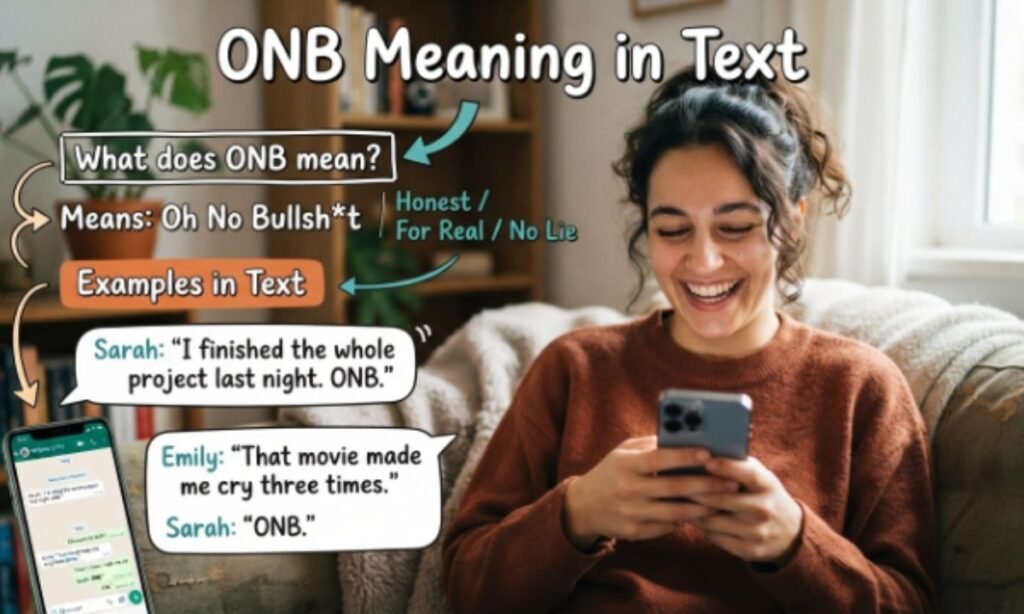
ONB is an acronym for “On Bro.” It’s part of a larger family of “on ___” phrases people use to back up a statement — the same way older generations might say “I promise” or “scout’s honor.”
You’ll usually see it used right after (or right before) a claim, like this:
- “I finished the whole project last night. ONB.”
- “ONB, that movie made me cry three times.”
- “She’s not lying, ONB she really did move to Texas.”
In every one of these, ONB isn’t adding new information. It’s a stamp of sincerity slapped onto whatever was just said. The person isn’t asking you to believe them — they’re telling you they mean it.
Where “On Bro” Comes From
This kind of “swearing on something” phrasing has roots that go back further than texting itself. People have long said things like “I swear on my life” or “I swear on my mother” to add emotional weight to a statement. Slang culture — especially hip-hop and street vernacular — shortened that habit into quick, casual phrases: “on god,” “on my mom,” “on everything,” and eventually, “on bro.”
Texting and social media didn’t invent the phrase. They just made it faster to type and easier to spread. Once it started showing up in captions, comments, and Discord servers, it picked up steam among younger users, particularly Gen Z.
Other Meanings of ONB (Yes, There’s More Than One)
Slang rarely stays in one lane, and ONB is no exception. Depending on who’s texting you and what platform you’re on, ONB can mean something else entirely.
| Meaning | Context | Example |
| On Bro | Most common. Emphasizes honesty or seriousness | “ONB, I’m not joking around.” |
| On Blood | Similar emphasis, more common in certain regional slang | “ONB I saw him there myself.” |
| On Buddha | Another honesty-emphasis variant, used in some communities | “ONB that’s exactly what happened.” |
| On Baby / On My Baby | Used affectionately between partners or close friends | “ONB I miss you already.” |
| Onboarding | Workplace shorthand, unrelated to slang | “We’ll ONB the new hires Monday.” |
| Old New Business | Meeting-minutes abbreviation in formal settings | “Moving to ONB on the agenda.” |
The everyday meaning you’ll run into 90% of the time is still “On Bro.” But if a coworker sends “ONB” in a Slack thread about new employees, they almost certainly mean onboarding — not slang.
How to Use ONB Correctly in a Text
Using ONB the right way is less about grammar and more about tone. It’s an emphasis word, so it works best when it’s dropped into a sentence the same way you’d drop in “seriously” or “no cap.”
Here’s how people actually use it:
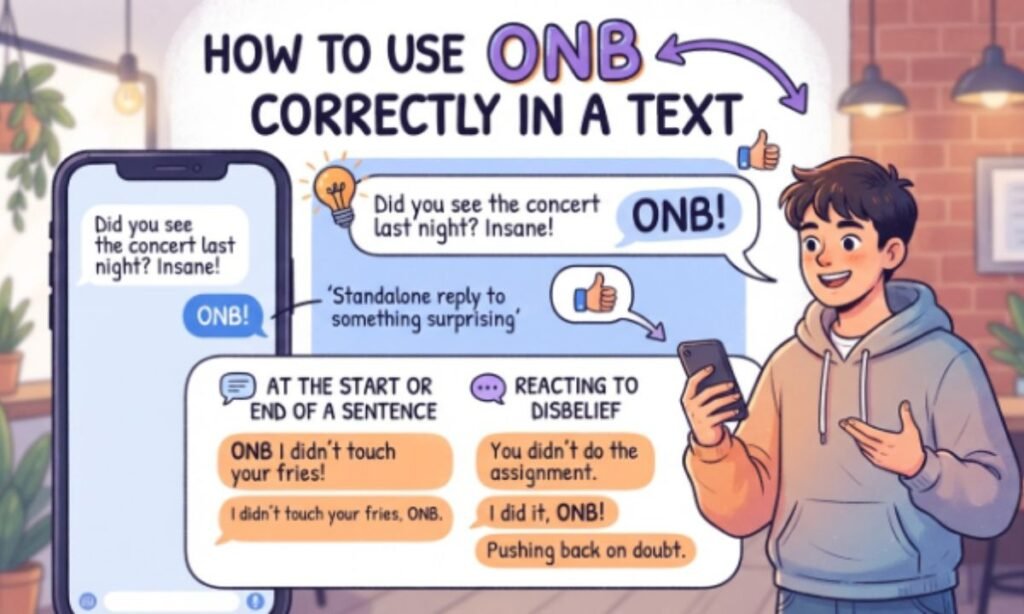
- As a standalone reply. Someone shares something surprising, and you respond with just “ONB” to co-sign it — similar to saying “facts” or “exactly.”
- At the start or end of a sentence. “ONB I didn’t touch your fries” or “I didn’t touch your fries, ONB.”
- In reaction to disbelief. If someone doubts your story, ONB pushes back on that doubt.
When Not to Use It
ONB is casual slang through and through, which means it has a pretty short list of places where it fits:
- Group chats with friends
- Social media comments and captions
- DMs on platforms like Instagram, Snapchat, or TikTok
And a longer list of places where it doesn’t:
- Work emails or professional Slack messages (unless you mean onboarding)
- Formal writing or resumes
- Conversations with people who aren’t familiar with internet slang — it just creates confusion
If you’re texting your manager about a deadline, “ONB” is not the move. Save it for the group chat.
ONB vs Similar Slang Terms
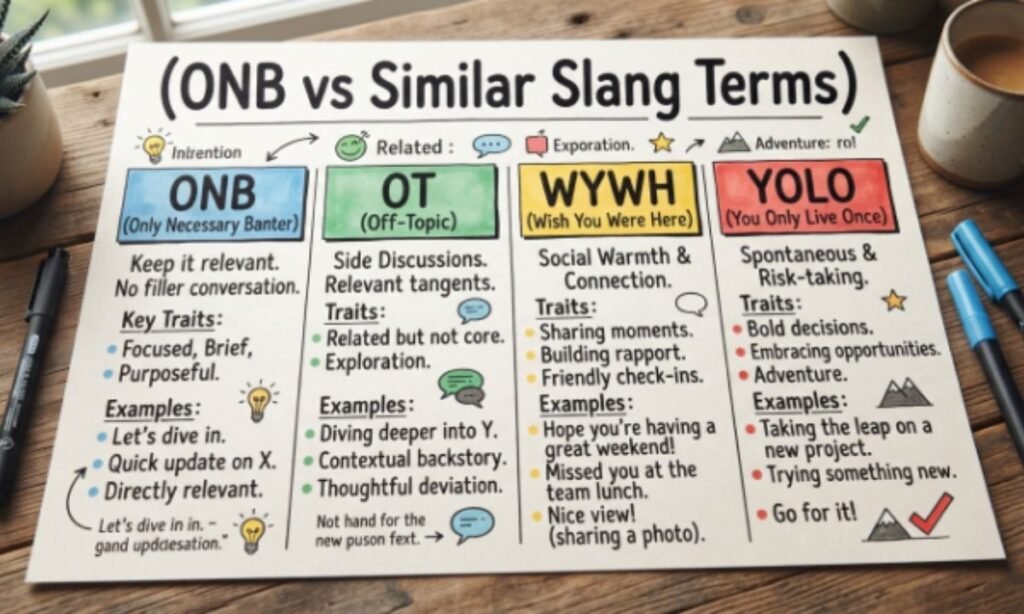
ONB belongs to a whole cluster of “emphasis slang” that younger texters use interchangeably, but each one carries a slightly different weight.
| Term | Meaning | Intensity |
| ONB | On Bro | Casual, everyday emphasis |
| ONG | On God | Slightly stronger, more emotional |
| FR | For Real | Neutral, widely understood |
| NC | No Cap | Emphasizes there’s no lying involved |
| ISWEAR | I Swear | Direct, old-school phrasing |
If you had to rank them by how “serious” they sound, ONG usually edges out ONB. ONB tends to feel a bit lighter and more conversational, which is part of why it caught on so widely — it doesn’t feel like you’re making a huge declaration, just backing up a point.
Real Text Examples
Seeing ONB used in context makes the meaning click faster than any definition can. Here are a few natural examples:
- Friend group chat: “Bro I actually got the internship. ONB I’m not playing.”
- Reacting to gossip: “Wait she said that to your face?” / “ONB she really did.”
- TikTok comment: “This trend is so underrated, ONB.”
- Playful teasing: “ONB you owe me $20 from Friday.”
Notice how none of these examples change meaning if you swap “ONB” for “I swear” or “for real.” That’s the whole function of the word — it’s a verbal handshake, not new content.
Why Slang Like ONB Keeps Spreading
Texting strips away tone of voice, facial expressions, and body language — all the things that normally tell us whether someone’s joking or serious. Short emphasis phrases like ONB fill that gap. They’re a quick way to say, “I know this sounds unbelievable, but I mean it.”
Social platforms accelerate that spread. A phrase that starts in one regional friend group can show up in comment sections nationwide within weeks, especially once it gets picked up in captions or trending audio. That’s exactly how ONB moved from spoken slang into everyday texting.
Final Thoughts
ONB isn’t complicated once you see it in action — it’s just a fast, casual way of saying “I mean this.” The confusion usually comes from context, not the word itself. Drop it in the wrong chat and it reads like gibberish. Drop it in the right one and it fits right in.
Next time you see ONB pop up in your messages, you won’t have to pause and guess. You’ll already know exactly what your friend, sibling, or that random comment section is trying to tell you: they’re being real, and they want you to know it.
FAQ
What does ONB mean in text?
ONB stands for “On Bro,” a slang phrase used to emphasize that someone is being honest or serious. It works the same way as saying “I swear” or “for real” in casual conversation.
What does ONB mean from a girl?
When a girl uses ONB, it usually carries the same core meaning — emphasizing honesty — but often with a bit more emotional weight. It’s commonly used to reassure someone or stress how much a statement matters.
What does ONB mean on Snapchat or TikTok?
On Snapchat and TikTok, ONB is used the same way as in regular texting: to back up a statement or reaction. You’ll often see it in captions, comments, or quick replies to add emphasis.
Is ONB the same as ONG?
Not exactly. ONG (“On God”) carries slightly stronger emotional intensity, while ONB (“On Bro”) feels more casual and everyday. Both function as honesty markers, just with different levels of weight.
How do you reply to ONB in a text?
You can reply with agreement, like “fr” or “I know right,” or simply echo it back with “ONB” to co-sign the statement. No special response is required — it’s mostly conversational.
What does ONB mean in business or work chats?
In a professional context, ONB almost always stands for “onboarding,” referring to the process of training new employees. It has no connection to the slang meaning in that setting.
Is it OK to use ONB in professional messages?
Only if you mean onboarding. As slang, ONB is too casual for work emails, official Slack channels, or formal writing, and it can come across as unprofessional or confusing.
Who uses ONB the most?
ONB is most common among Gen Z and younger millennials, particularly on TikTok, Instagram, and Snapchat, where quick emphasis slang spreads fast through comments and captions.
