

You open a TikTok profile and the bio starts with three odd letters followed by a colon. Before you’ve even tapped follow, you wonder if you’re being warned about something. The byi meaning in text is simpler than it looks, and once you spot it, you’ll see it all over your feed.
People search for this one because it shows up with no explanation. It sits at the top of a bio, in a pinned comment, or at the start of a message, and it looks a bit like a warning label. That’s enough to make anyone pause, especially if they’re about to send a first DM.
This guide covers what BYI stands for, how it works on each app, and how the tone changes its feel. You’ll also get reply ideas, the grammar behind it, where it came from, and where it doesn’t belong.
BYI stands for “Before You Interact.” It’s an internet acronym people put in bios, comments, and messages as a short note about themselves, such as a boundary, habit, or personality quirk, so others know what to expect before they follow, message, or engage with them.
What Does BYI Mean in Text?
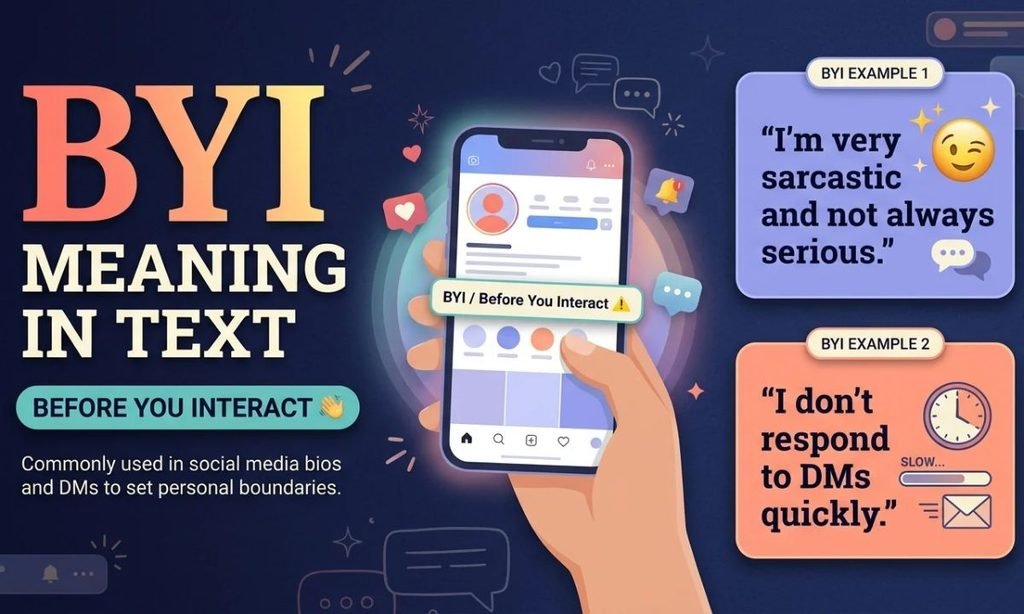
The BYI meaning in text is “Before You Interact.” Think of it as a personal note left for everyone at once. The writer wants to tell you one thing about themselves up front, so there’s less to untangle later.
It’s commonly used in social media bios, especially on TikTok and Twitter (X), to share personal notes, boundaries, or important context. It can work as a boundary, a heading, or a personality quirk announced upfront. The pattern is simple: label first, explanation second.
Here’s how it looks in the wild:
- “BYI: I’m very sarcastic and not always serious.”
- “BYI: I don’t respond to DMs quickly.”
Both are examples of someone choosing to share a small piece of themselves in advance. The tone can be sarcastic or sincere, depending on the writer.
People use it to head off misunderstandings and to stay honest without sounding harsh. You’ll find it in bios and profile descriptions far more than in direct chats. It lives mostly in casual and informal spaces, where nobody expects a polished sentence.
A texting example makes the idea clear. Friend 1: “Why do you take forever to reply?” Friend 2: “BYI, I keep a silent phone all day.” That isn’t an excuse. It’s a heads-up about how that person handles messages, and anyone who follows them and reads the line already knows what to expect.
I first noticed it in a TikTok bio, sitting above a short list of rules. It took me a minute to work out that nobody was being hostile. It was just a note.
Is BYI an Acronym?
Yes, and a genuine one. BYI is an acronym and a short form of “Before You Interact.” It counts as a profile-based internet slang term that grew up around bios.
People write it intentionally, usually as a heading or a disclaimer above whatever comes next. What it isn’t matters just as much:
- It isn’t a meme-based joke word.
- It isn’t a phonetic spelling of anything.
- It isn’t a typing error, and nobody lands on BYI through a random slip of the thumb.
If you spot it, the writer meant it.
What Does BYI Mean in Chat?
In direct chat, the term shows up less than in a bio, but the core meaning doesn’t budge. Mid-chat, BYI acts as a soft warning, a mini disclaimer, or a personal note dropped before continuing the conversation. It softens what might otherwise sound blunt.
A few lines you might see:
- “BYI, I’m not good at texting.”
- “BYI, I might disappear randomly.”
Here’s one more. Friend 1: “You never answer fast.” Friend 2: “BYI, I forget my phone exists sometimes.” Nobody gets offended, and the chat moves on.
I’ve seen it land well in chats where one person has already been burned by a misunderstanding. Saying it early saves everyone the awkward back-and-forth later.
BYI Meaning on Each Platform
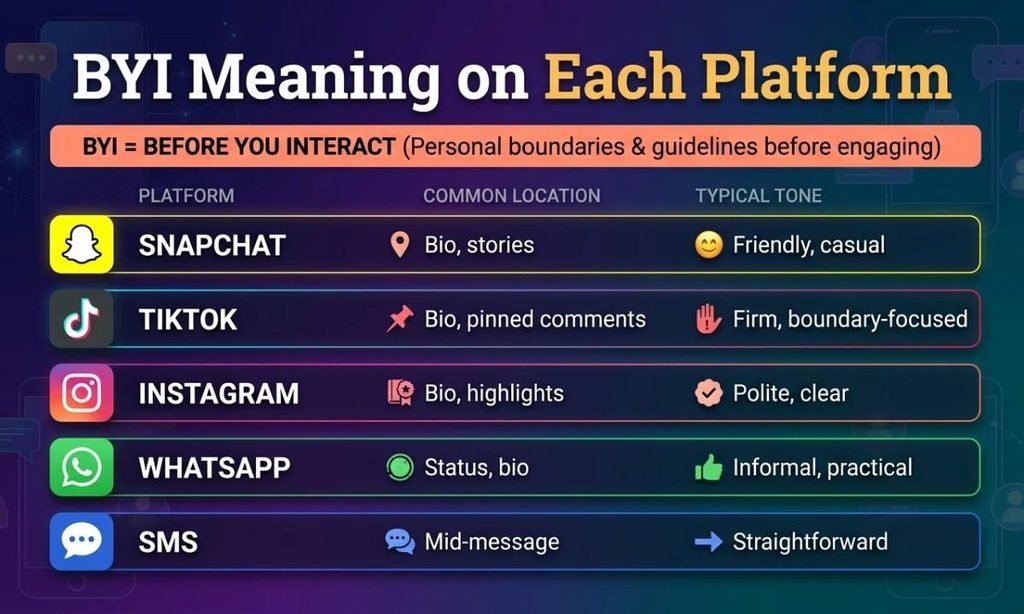
Every platform gives BYI a slightly different flavor, though the core meaning never shifts. Bios, stories, pinned comments, highlights, status updates, and even a mid-message aside are all common places for it, depending on the app. Here’s the quick view:
| Platform | Common location | Typical tone |
| Snapchat | Bio, stories | Friendly, casual |
| TikTok | Bio, pinned comments | Firm, boundary-focused |
| Bio, highlights | Polite, clear | |
| Status, bio | Informal, practical | |
| SMS | Mid-message | Straightforward |
BYI on Snapchat
On Snapchat, the meaning stays casual and honest. You’ll see it in bio sections, bio lines, story highlights, and private story descriptions. There it usually flags a texting habit or a personality quirk.
Snapchat keeps things short: a quick line and done. The tone reads as friendly and honest rather than defensive, though a few lines lean slightly defensive. It’s rarely used mid-conversation here.
Say Friend 1 wants to know why you disappeared yesterday. Friend 2: “BYI, I ghost sometimes but it’s never personal.” Another common version is “BYI: I ghost sometimes but it’s not personal.”
BYI on TikTok
TikTok is where BYI shows up the most. Creators use it constantly in bio sections, pinned comments, intro slides, and videos. It’s often stacked into a short list format, with one bio block turned into a mini list that lays out several boundaries at once.
The tone is structured, detailed, firm, and boundary-focused. A typical comment reads: “BYI: I don’t reply to negativity.” Another bio line says, “BYI: I don’t support drama accounts.”
A list-style bio might look like this:
- I block negativity
- Don’t spam
- No personal questions
BYI on Instagram
Instagram treats BYI as part of aesthetic profile culture. It sits in bio descriptions, story highlight titles, and About Me posts. Sometimes it’s tucked into a single highlight or bio line.
People use it there to explain personality traits, social boundaries, and content expectations. The tone is polite but firm, and clear. Friend 1: “Why don’t you post selfies?” Friend 2: “BYI, I’m just a shy camera.”
BYI on WhatsApp
On WhatsApp, BYI is rarer but consistent when it does appear. You’ll find it in status updates and the bio section, mostly to explain slow replies. The tone is informal but respectful.
Because WhatsApp is shared one-on-one rather than publicly, it feels like the most personal of the bunch. It’s also practical and informative. Friend 1: “You reply so late.” Friend 2: “BYI, I work full-time so texts wait.” You might also see “BYI: I reply late because I work full-time.”
BYI in SMS
In plain SMS texting, BYI reads as a heads-up before the rest of the message lands. There’s no styling and no list, just a straightforward line. For example: “BYI, I’m busy this week.”
How Does Tone Change the Meaning of BYI?
The byi meaning in text never actually changes. The mood wrapped around it does, depending on who’s talking and what’s going on. Here’s how the same three letters sound in five moods.
Funny Tone
Friend 1: “Why didn’t you reply?”
Friend 2: “BYI, I disappear like a Netflix show after one season.” (You’ll also see it as “a show that got cancelled after one season.”)
Friend 1: “That’s wild.”
Sarcastic Tone
Friend 1: “You’re always late.”
Friend 2: “BYI, I run on fictional time.”
Friend 1: “Makes sense.”
Romantic Tone
Friend 1: “You reply slow.”
Friend 2: “BYI, I overthink texts from people I like.”
Friend 1: “That’s kinda cute.”
Anyone who tends to reply slowly to a crush will recognize that one.
Angry Tone
Friend 1: “Why are you so sensitive?”
Friend 2: “BYI, I don’t tolerate disrespect.”
Friend 1: “Okay, I get it.”
No jokes here. In an angry tone, BYI works as a hard stop.
Playful Tone
Friend 1: “You’re so chaotic.”
Friend 2: “BYI, chaos is my brand.” Another version goes, “BYI, chaos is basically my whole personality.”
Friend 1: “I see that.”
Real Chat Examples of BYI
These are the kind of exchanges I come across most. Notice how each BYI line answers a question before it turns into an argument.
- Friend 1: “Why don’t you post much?” Friend 2: “BYI, I hate attention.”
- Friend 1: “You seem quiet.” Friend 2: “BYI, I’m introverted.”
- Friend 1: “You unfollowed me.” Friend 2: “BYI, I clean my following list often.”
- Friend 1: “You joke too much.” Friend 2: “BYI, sarcasm is my love language.”
- Friend 1: “Why no selfies?” Friend 2: “BYI, I’m camera shy.” (A shy camera, as one bio puts it.)
- Friend 1: “You don’t answer calls.” Friend 2: “BYI, I prefer texting.”
- Friend 1: “Why block comments?” Friend 2: “BYI, I protect my peace.”
- Friend 1: “You changed.” Friend 2: “BYI, growth is real.”
- Friend 1: “You seem cold.” Friend 2: “BYI, I take time to open up.”
- Friend 1: “Why no voice notes?” Friend 2: “BYI, I hate hearing my voice.”
BYI Grammar: How the Acronym Works in a Sentence
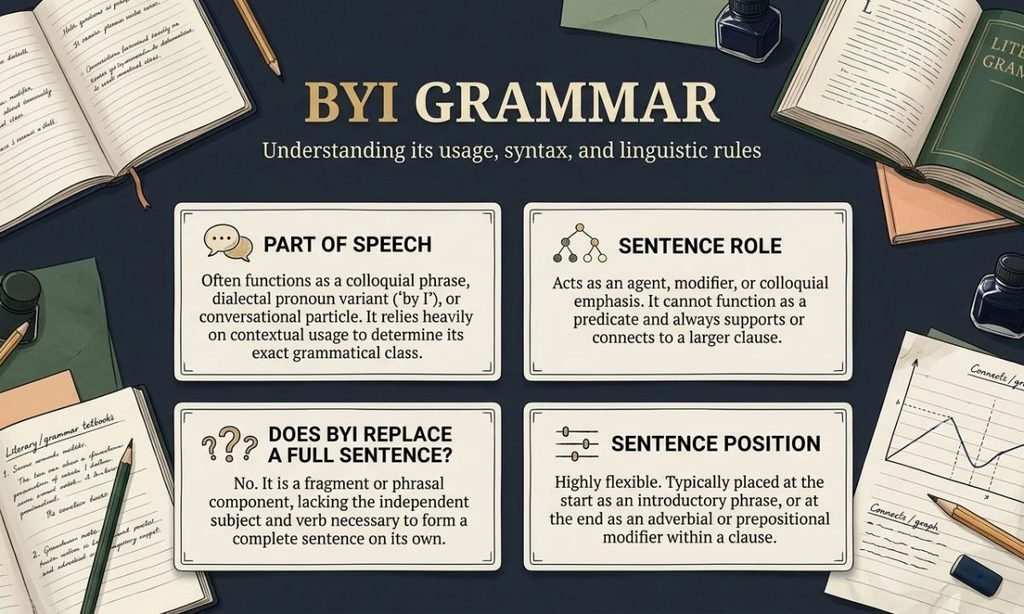
Grammatically, BYI is a discourse marker, not a full sentence. It introduces information, and knowing that helps you use it naturally instead of guessing where it fits. It almost always sits at the start of a message and pairs with a colon, which is why it works so well as a bio heading before a list.
Part of Speech
BYI is an acronym-based discourse marker. It opens a statement rather than standing in for one.
Sentence Role
It typically appears at the beginning of a sentence, a paragraph, or a bio heading. It can also come right before a list. The actual point follows, as in “BYI: I’m socially awkward.”
Does BYI Replace a Full Sentence?
Not exactly. It introduces a sentence but doesn’t replace one. The words that follow do the real work, so BYI never stands alone.
Sentence Position
BYI is mostly found at the start of a sentence, the start of a paragraph, or as a bio header. Dropped mid-sentence, it feels off, so people rarely do it.
Formal vs. Informal Usage
BYI is strictly informal and internet-specific. It has no place in professional emails or academic writing, where formal phrasing wins. It still carries real weight in casual spaces: it sets boundaries, adds transparency, and signals self-awareness.
Why Do People Use BYI Online?
People reach for BYI because it sets expectations quickly. One line replaces a long explanation and the awkward back-and-forth that would otherwise happen later. Without it, you’d repeat the same explanation in every new conversation.
In everyday conversations, people drop BYI right before explaining something personal. It works as a gentle heads-up rather than a harsh warning, so the message lands softer. That softness is the whole point.
It also works as a soft defense mechanism. Instead of arguing after the fact, people explain themselves upfront. That cuts down drama, which is a big reason it keeps spreading.
How to Reply When Someone Says BYI
When someone uses BYI, they’re opening up a little. They’re sharing a note about themselves, so your reply should show respect for that. A BYI note doesn’t need a speech, just proof you read it. The key is acknowledging their statement.
Funny Replies
These work best when the other person was joking too:
- “Noted, I’ll interact carefully.”
- “Thanks for the warning.”
- “BYI accepted.”
Serious Replies
- “Thanks for letting me know.”
- “I appreciate the heads-up.”
- “That makes sense.”
Flirty Replies
- “Good to know. I’ll still interact.”
- “I like the honesty.”
- “Now I’m more curious.”
Neutral Replies
- “Got it.”
- “Understood.”
- “That’s fair.”
Is BYI Rude?
No. BYI isn’t rude at all on its own, and it isn’t a bad term either. Whatever comes after it decides the mood. The tone of the sentence that follows matters far more than the three letters.
Is BYI Disrespectful?
That depends on how it’s written. A blunt line like “BYI: Don’t be annoying” can feel harsh. A calmer version like “BYI: I value respectful conversations” sounds polite. The acronym stays the same, and the sentence after it decides everything.
Is BYI a Bad Word?
No. It’s completely neutral and safe, and it contains no profanity. It’s informal, though, and that matters in formal or professional settings, where it can look out of place.
Can You Use BYI in School?
It’s fine in casual chats with classmates. Skip it in essays or formal assignments.
Can You Use BYI at Work?
Not in formal emails. It might slip into informal team chats or creative industries, though I’d keep it out of anything official.
Picture a marketing coworker who adds a BYI line to a casual team chat bio. That’s usually fine. Pasting it into a client email is a classic workplace mistake, because it reads as slang where polish is expected.
Who Uses BYI?
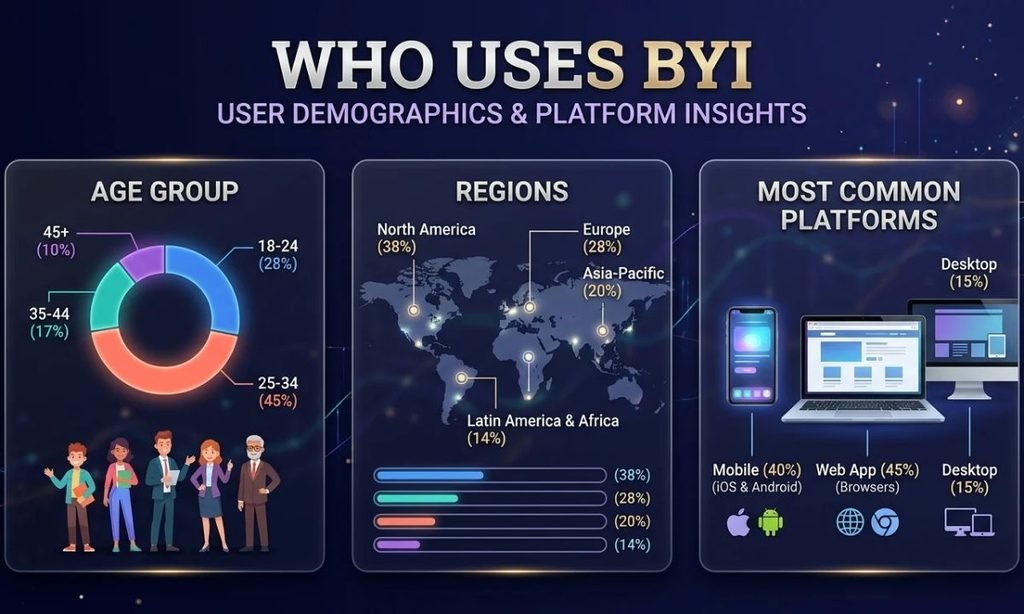
The term skews younger. It’s popular with younger internet users and shows up most on bio-heavy platforms, so the age group tells you a lot.
Age Group
Gen Z and Younger Millennials lead the way. Teens and young adults use it the most.
Regions
BYI is common in the United States, the UK, Canada, and Australia, along with global online communities. It’s internet-based, not location-based, so regions matter less than platforms.
Most Common Platforms
TikTok, Twitter (X), Instagram, and Discord are the main homes. Those platforms share one habit: a profile where you can say something before anyone messages you.
Where Did BYI Come From?
The exact origin of BYI is unclear, so treat any firm date or single-source claim with suspicion. It likely emerged from bio culture on Twitter and Tumblr. Online boundary-setting trends and mental health awareness movements probably fed into it too.
As internet users became more open about personal limits, social anxiety, and communication styles, a shift toward upfront communication followed. BYI gave that shift a short label and a quick way to explain yourself.
It reflects an online identity culture where people set boundaries publicly, clarify expectations, and share personality disclaimers. It isn’t tied to a single meme or viral moment. It belongs to internet culture as a whole.
BYI vs. IDK, ion, dunno, and idc
New slang gets mixed up easily, and a mix-up here can change how a message reads. This table shows how BYI stacks up against the shorthand it’s often confused with.
| Term | Meaning | Formal/Informal | Tone | Popularity | Confusion Risk |
| BYI | Before You Interact | Informal | Boundary-setting | Growing | Medium |
| IDK | I Don’t Know | Informal | Neutral | Very high | Low |
| ion | I don’t | Very informal | Casual | Medium | High |
| dunno | Don’t know | Informal | Relaxed | High | Low |
| idc | I Don’t Care | Informal | Dismissive | Very high | Low |
IDK expresses uncertainty, and idc shrugs something off. BYI is different because it introduces context, not an opinion or a shrug. If you like decoding texting shorthand, you can also check out our guide on ASB meaning in text.
What Real Conversations Show
In real conversations, BYI rarely appears randomly. I mostly see it placed in bios, or pulled out when someone feels misunderstood. It’s a soft way for people to explain themselves before an argument starts, which cuts down drama and sets expectations early.
It’s especially common among users who care about mental health awareness and clear online boundaries. That’s my own read from the bios and chats I’ve come across, not a measured result. The pattern shows up often enough to be worth noting.
When to Use BYI in a Conversation
Use BYI when you want to explain a boundary, a habit, or a personality trait before someone reacts to it. Bios and opening lines work best. It also fits right before a longer explanation, where the label tells people an explanation is coming.
Good moments to use it:
- In social media bios
- When explaining communication habits
- To clarify personality traits
- In informal chats
Moments to skip it:
- Professional emails
- Academic writing
- Formal business settings
Common Mistakes
Using it aggressively is the big one. Overloading a bio with too many warnings is another, and so is assuming everyone understands it. If your audience is older or off social media, a quick explanation helps.
Smart Usage Tip
Keep it short, respectful, and clear. BYI works best when it builds understanding, not when it pushes people away.
Spotting BYI Next Time
Once you know the byi meaning in text, spotting it becomes second nature, and replying feels natural instead of awkward. At its core, it’s an honest heads-up that sets expectations early and avoids confusion. Whether it sits in a TikTok bio or at the top of a text, the awkward part is already handled by the time someone interacts with you.
It’s a small piece of internet language, but it shows a bigger shift as online culture keeps evolving in 2026. People value transparency and honest communication. Next time you see it, you’ll know exactly what’s being said, and a simple “Thanks for letting me know” is all you need to reply.
FAQs
What does BYI mean in text?
BYI stands for “Before You Interact.” People use it in bios, comments, and messages as a short note about themselves, like a boundary or habit, so others know what to expect before they engage.
What does BYI stand for on TikTok?
On TikTok, BYI means “Before You Interact.” Creators put it in their bio or pinned comment, often followed by a short list of rules such as “don’t spam” or “no personal questions.”
What does BYI mean on Snapchat and Instagram?
It means the same thing on both apps. On Snapchat it usually appears in bios and story highlights, while on Instagram it shows up in bio lines, highlights, and About Me posts to explain personality traits or boundaries.
Is BYI an acronym or just slang?
It’s both. BYI is an acronym for “Before You Interact” and counts as informal internet slang that grew out of profile bios. It isn’t a typo or a phonetic spelling.
How do you reply when someone says BYI?
Keep it short and respectful. “Thanks for letting me know,” “Got it,” or “I appreciate the heads-up” all work well, and you can add a joke if the other person’s tone was playful.
Is BYI rude or disrespectful?
No, BYI itself is neutral and harmless. Whether it feels rude depends on the sentence that follows, since “BYI: Don’t be annoying” reads harsher than “BYI: I value respectful conversations.”
Is BYI a bad word?
No. It contains no profanity and is completely safe to use in casual chats. It’s still informal slang, so it’s best kept out of formal writing.
Where do people usually put BYI?
Most people place it at the start of a bio, caption, or pinned comment, often followed by a colon and a list. It appears less often in direct messages.
Can you use BYI at work or school?
It’s fine in casual chats with classmates or coworkers. Avoid it in professional emails, essays, and formal assignments, where it can look out of place.
Who uses BYI the most?
Mostly Gen Z, younger Millennials, teens, and young adults. It’s most common on TikTok, Twitter (X), Instagram, and Discord.
Where did BYI come from?
The exact origin isn’t documented. It likely grew out of bio culture on Twitter and Tumblr, along with online boundary-setting trends and mental health awareness movements.
Is BYI the same as IDK or IDC?
No. IDK means “I don’t know” and IDC means “I don’t care,” and both express an opinion or a shrug. BYI introduces context or a boundary before a conversation starts.
Why do people put BYI in their bio?
It lets them explain themselves once, upfront, instead of repeating the same thing in every new chat. It also cuts down on misunderstandings and drama later.
What are some examples of BYI in a sentence?
Common ones include “BYI: I’m very sarcastic and not always serious,” “BYI, I reply late because I work full-time,” and “BYI, I prefer texting over calls.”
