

You’re scrolling through a group chat and someone drops a quick “dw” at the end of their message. No punctuation, no explanation, just those two letters sitting there. If you’ve ever paused mid-scroll wondering what does dw mean in text, you’re definitely not alone. This little abbreviation shows up everywhere — texts, Instagram comments, Discord servers, even work Slack channels — and once you know it, you’ll start noticing it constantly.
So let’s clear it up. This guide covers exactly what DW means, where it came from, how people actually use it in real conversations, and a few situations where it can mean something slightly different than you’d expect.
What Does DW Mean In Text? The Quick Answer
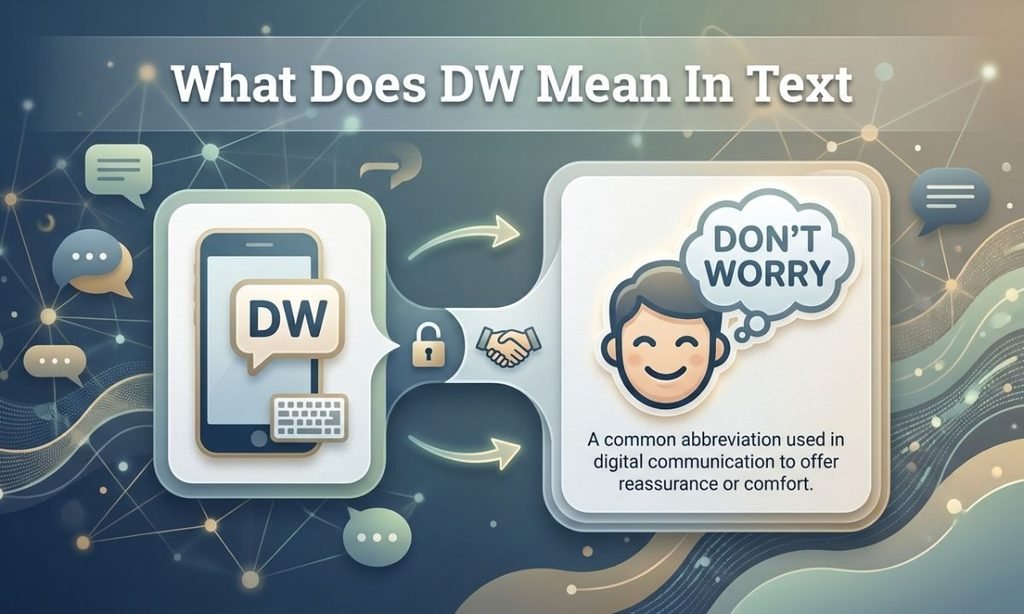
DW stands for “don’t worry.” It’s a short, casual way to reassure someone or brush off a small concern without typing out the full phrase. When a friend texts you “dw about it,” they’re telling you not to stress, not to feel bad, or not to make a big deal out of something.
Here’s a simple way to remember it:
| Letter | Stands For |
| D | Don’t |
| W | Worry |
That’s really the whole meaning of DW in text form. It’s short, low-effort, and fits perfectly into the fast pace of modern texting.
Where Does DW Come From?
Text abbreviations like DW didn’t appear out of nowhere. They grew out of early SMS culture, back when phones had character limits and typing on a numeric keypad was slow and annoying. People needed shortcuts, so common phrases got trimmed down to their bare bones — “be right back” became BRB, “laughing out loud” became LOL, and “don’t worry” eventually became DW.
As messaging moved from flip phones to smartphones and then to apps like iMessage, WhatsApp, and Snapchat, these abbreviations stuck around simply because they work. Even with full keyboards and autocomplete, people still prefer typing “dw” over “don’t worry.” It feels more casual, more relaxed, and honestly, it just matches the tone of texting better than a full sentence would.
How People Use DW in Texting and Chat
Once you understand the basic dw meaning in text, it helps to see how flexible the abbreviation actually is. It’s not just one rigid phrase — it shifts slightly depending on the moment.
DW as a Reassurance
This is the most common use. Someone apologizes, explains a mistake, or brings up something awkward, and the other person responds with “dw” to smooth things over.
Example:
Sam: sorry I’m gonna be like 10 min late Jordan: dw, no rush
Here, DW is doing the job of comfort. It tells Sam that being late isn’t a problem worth stressing over.
DW as an Acknowledgment
Sometimes DW is used to close out a conversation or confirm that something’s already handled.
Example:
Mia: did you end up telling him about the schedule change? Alex: dw I already sorted it
In this case, dw means “it’s taken care of,” which is a slightly different flavor of the same core idea — there’s nothing left to worry about.
DW vs Other Similar Texting Abbreviations
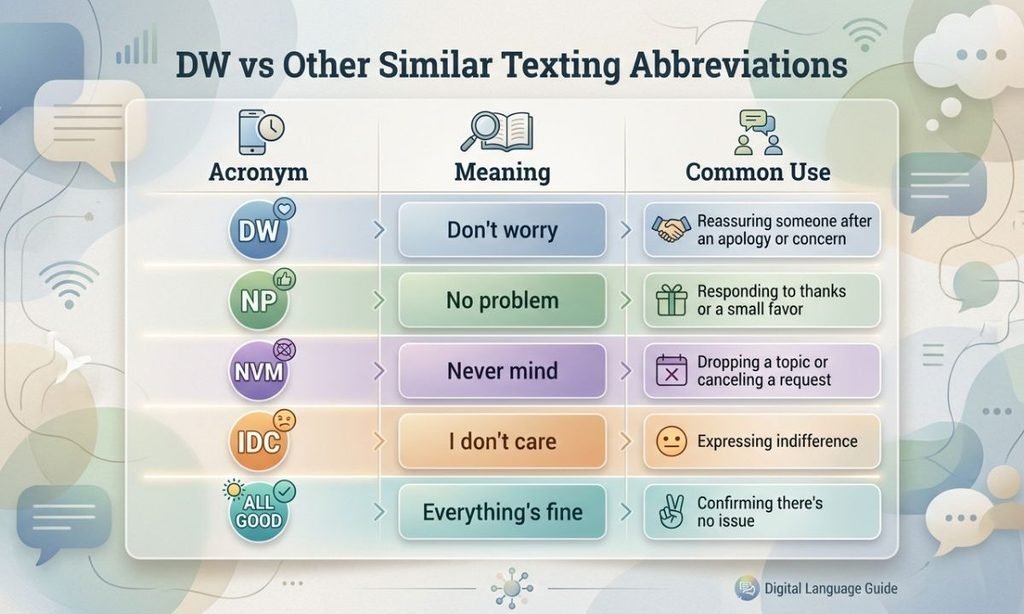
Texting slang is full of short reassurance phrases, and people sometimes mix them up. Here’s how DW compares to a few similar ones.
| Acronym | Meaning | Common Use | Tone |
| DW | Don’t worry | Reassuring someone after an apology or concern | Casual, friendly |
| NP | No problem | Responding to thanks or a small favor | Casual, polite |
| NVM | Never mind | Dropping a topic or canceling a request | Neutral, sometimes dismissive |
| IDC | I don’t care | Expressing indifference | Can sound blunt |
| ALL GOOD | Everything’s fine | Confirming there’s no issue | Warm, informal |
Notice that while NP and DW can overlap, they’re not identical. NP usually answers “thank you,” while DW usually answers an apology, a worry, or an explanation. Getting that distinction right helps your texts land the way you intend.
Real Text Message Examples Using DW
Seeing the abbreviation in context makes the meaning click faster than any definition could. Here are a few natural examples of how dw shows up in everyday texting.
Example 1 — Canceling plans
Priya: hey I can’t make it tonight, something came up Taylor: dw we can reschedule anytime
Example 2 — Money or favors
Chris: I still owe you for lunch Devon: dw about it, you got the last one
Example 3 — Group chat context
Group message: “dw everyone, the venue got moved to 7pm not 6”
Example 4 — Reassuring during stress
Riley: I think I messed up the presentation Jamie: dw it honestly went fine, promise
In each case, the phrase softens the moment. That’s really the emotional job DW plays in conversation — it lowers tension quickly and keeps things moving.
What Does DW Mean in Different Contexts
Slang doesn’t always behave the same way across every platform. The dw meaning in slang generally stays consistent, but the tone can shift depending on where you’re chatting.
DW Meaning in Slang
In everyday slang, DW is almost always “don’t worry.” It’s used the same way you’d use a reassuring nod or a quick “it’s fine” in person. There’s rarely any hidden meaning — it’s meant to be simple and direct.
DW Meaning in Chat Apps and Social Media
On platforms like Instagram, TikTok comments, Discord, and X (formerly Twitter), dw in chat still means “don’t worry,” but it often appears alongside other slang. You might see something like “dw bestie you’re overthinking this” or “dw it’s not that deep.” The core dw meaning in chat doesn’t change — it’s still reassurance — but the surrounding language tends to be more playful.
DW in Professional or Work Messages
This is where things get a little more nuanced. In more relaxed workplace chats — think Slack or Teams messages between coworkers who know each other well — dw can still mean “don’t worry” and works fine. But in formal emails or messages to clients, it’s better to avoid abbreviations altogether. Spelling out “don’t worry about it” or “no need to worry” keeps the tone professional while still being warm.
Common Mistakes People Make With DW
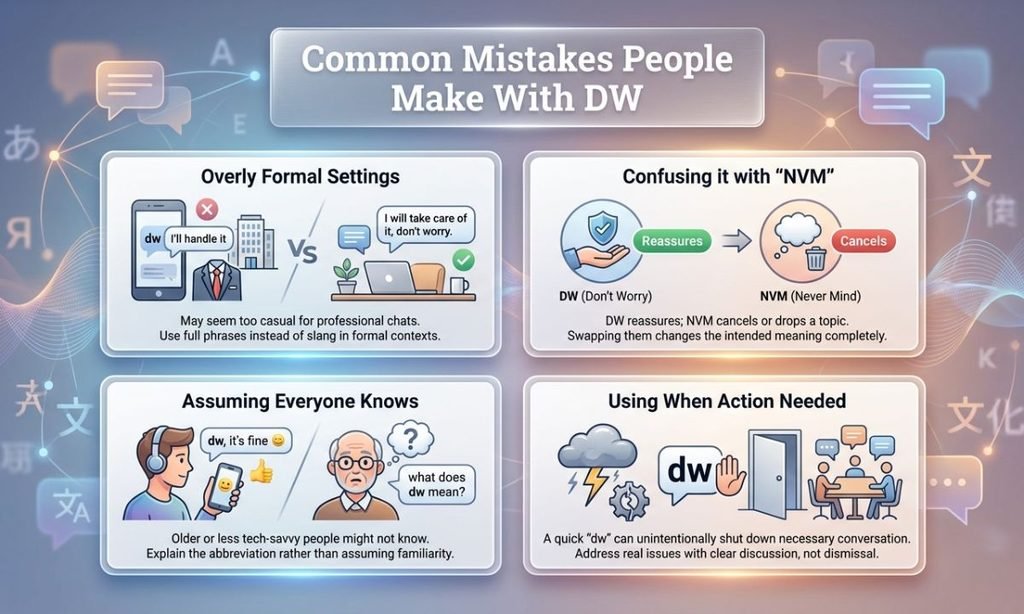
Even simple abbreviations can trip people up, especially if you’re new to texting slang or talking with someone from a different age group. Here are a few common slip-ups:
- Using it in overly formal settings. Texting your boss “dw I’ll handle it” might come across as too casual, depending on your workplace culture.
- Confusing it with NVM. DW reassures; NVM usually cancels or drops something. Swapping them can change your meaning.
- Assuming everyone knows it. Older relatives or people less familiar with texting slang might genuinely ask, “what does dw mean?” It’s worth explaining rather than assuming.
- Using DW when something actually needs addressing. If a real issue needs discussion, a quick dw can unintentionally shut down the conversation instead of resolving it.
Other Meanings of DW You Should Know
While “don’t worry” is by far the most common dw meaning in text, the same two letters pop up elsewhere with completely different definitions. Context always decides which one applies.
- DW (Deutsche Welle): A well-known German international news broadcaster. You can learn more about the organization through its official Deutsche Welle website.
- DW (Dear Wife or Dear Wife): Occasionally used in older internet forums and parenting communities.
- DW (Doctor Who): Fans sometimes shorten the show’s name to DW in fandom spaces.
- DW (Design Work or Dish Washer): Used in more niche or industry-specific chats.
If a message doesn’t seem to fit “don’t worry,” it’s worth checking the platform or community you’re in — that context usually points you to the right definition.
How to Respond When Someone Texts You DW
If someone sends you a message with dw in it, you don’t need to overthink your reply. A simple, natural response works best:
- Acknowledge it casually — “okay, thanks” or “appreciate that.”
- Move the conversation forward — ask a follow-up question or continue the topic.
- Mirror the tone — if they’re being relaxed and reassuring, match that energy instead of over-apologizing further.
For example, if someone texts “dw about the mix-up, it happens,” a natural reply might be “thanks, appreciate you being chill about it” rather than continuing to over-explain. If you’re exploring other common texting abbreviations, you can also read our guide on what does DTM mean in text to compare another popular abbreviation and its different uses.
Final Thoughts on What DW Means in Text
At its core, dw is a small phrase that does a big job — it reassures, comforts, and keeps conversations moving without unnecessary tension. Whether you’re texting a friend, chatting in a group thread, or scrolling through comments, knowing what does dw mean in text helps you read the tone of a conversation accurately and respond naturally.
Next time you see it pop up, you’ll know exactly what’s being said: don’t worry, it’s handled, and there’s nothing to stress about.
FAQs
What does dw mean in text?
DW stands for “don’t worry.” People use it to reassure someone or brush off a small issue without typing the full phrase. It’s common in texts, group chats, and social media comments.
What does dw mean in a text message from a girl or guy?
The meaning doesn’t change based on who sends it — dw still means “don’t worry” regardless of gender. It’s simply a casual way to comfort or reassure the other person in the conversation.
Does dw mean don’t worry?
Yes, in almost every texting context, dw means “don’t worry.” It’s used to calm someone down, dismiss a small concern, or confirm that something’s already taken care of.
What is the full form of dw in chat?
The full form of DW in chat is “don’t worry.” Some niche communities use DW differently (like Deutsche Welle or Doctor Who), but in everyday texting, “don’t worry” is the standard meaning.
What does dw mean in slang?
In slang, dw carries the same core meaning as texting: “don’t worry.” It’s often paired with casual phrases like “dw bestie” or “dw it’s not a big deal” on social platforms.
Is dw the same as np (no problem)?
Not exactly. DW usually responds to an apology or a worry, while NP typically responds to “thank you.” They’re similar in tone but used in slightly different situations.
What does dw mean over text when someone apologizes?
When someone apologizes and you reply “dw,” you’re telling them the mistake isn’t a big deal and there’s nothing to feel bad about. It’s a quick, friendly way to move past the moment.
