


Your phone buzzes. A friend sends a single word, “arl,” and nothing else. You stare at it for a second and wonder what does ARL mean in text, and whether you accidentally said something wrong.
People search for this one because it looks like a slang term but doesn’t match any acronym they know. It isn’t as familiar as OMG or BRB, and it shows up in fast, casual spots like Snapchat, group chats and gaming lobbies. Add the fact that it can also be a typo or an organization name, and the mix-up makes sense.
This guide gives you the short answer first, then the details: where the word likely came from, how to read it, how to reply, and when to leave it out of a message entirely.
Quick answer: In most text messages, ARL means “alright.” It works as a casual way to say okay, got it, or sounds good. It is usually a typo or twist on “ALR,” the more common slang version. In news stories, ARL can also name an organization, such as the Army Research Laboratory.
The Three Possible Meanings of ARL

Context decides which meaning fits, and there are really three candidates.
The first and most likely is “alright.” This is the usual reading in casual texts. The second is a slip for “IRL,” which stands for “in real life.” It tends to show up when the conversation is about meeting in person. The third is an organization name. The Army Research Laboratory appears in news and reports, where capital letters and a formal tone give it away.
The first two are explained by the typo theory, which I’ll get to below. The third has nothing to do with texting at all. Whenever you spot ARL, the same rule applies: the surrounding conversation tells you which one you’re looking at.
ARL Meaning in Text, Explained Simply
Think of ARL as a quick okay. It’s a friendly nod in three letters.
Say you text a friend, “Meet me at 7?” and they send back “arl.” They mean “got it” or “fine by me.” In that one short reply, they’ve given agreement, understanding, acceptance and confirmation. It does the same job as “Sounds good,” “Got it” or “That’s fine.”
I like to describe it as a shortened word that got shortened again. “Alright” is already a casual version of “all right,” and ARL trims it even further. That’s the whole idea behind this kind of internet slang. It’s a casual digital shortcut and a quick way to save time, especially when you’re agreeing with someone in the middle of a busy conversation.
There’s no drama and no hidden code. ARL is not a rude word and not a secret warning. The sender isn’t angry. I’ve watched people spiral over a one-word reply, and almost every time the sender was just replying quickly. Read the whole message before you decide how to feel. The tone comes from the emojis around it and the words that came before.
It also isn’t a well-known abbreviation like OMG or BRB. If you freeze when you see it, you’re in good company. The third is an organization name. The Army Research Laboratory appears in news and reports, where capital letters and a formal tone give it away.
Is ARL the Same as ALR?
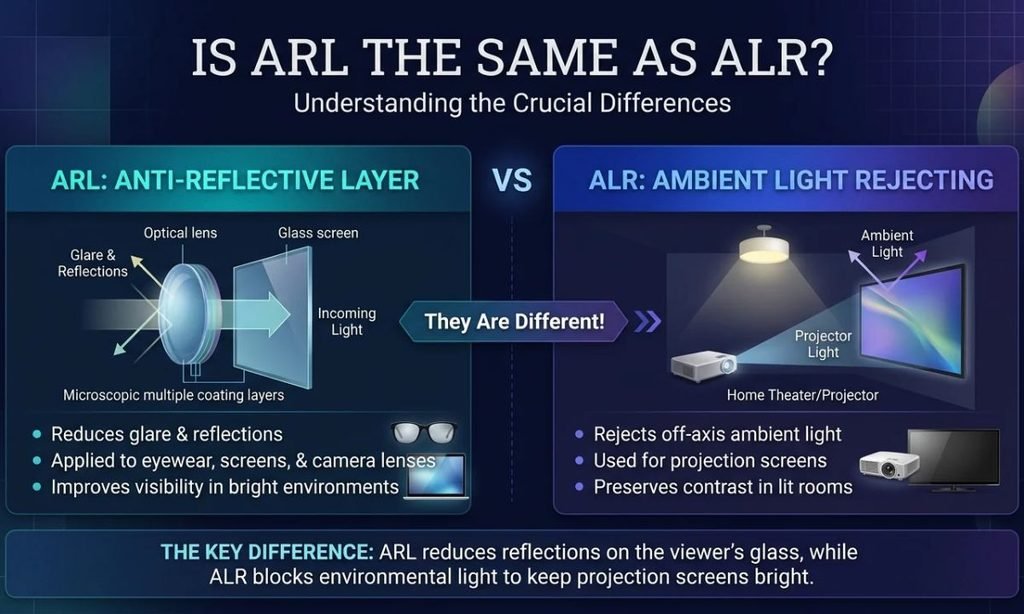
Mostly, yes. The two share the same letters, and ALR is the form people actually use online. It’s a short way to write “alright,” and you’ll see it in chats on many apps.
ARL is usually a small slip where the letters L and R swap places. The message still makes sense to the reader, so nobody corrects it. That’s the difference between a typo and slang in a nutshell. ALR is the established shortcut, and ARL is most often its scrambled cousin.
When ALR Means “Already”
Some people use ALR to mean “already.” A message like “alr done” can mean “already done.” Still, “alright” is the far more common reading, so treat “already” as the less likely option unless the sentence clearly calls for it.
Can Someone Use ARL on Purpose?
Occasionally, yes. Some friend groups invent their own spellings and inside jokes, and ARL can become a planned slang word with a personal meaning in that circle. If a friend does this regularly, the word may mean exactly what the group decided it means. When you’re unsure, a quick question is the best fix.
Where Did ARL Come From?
The honest answer is that nobody knows for sure, and the origin is debated. ARL isn’t a standard entry in most slang references, and no official dictionary lists it as an abbreviation. Many people treat it as a scrambled version of “alr,” the more established form.
From what I’ve seen in group chats, it often starts life as a typo that people keep because it looks fine. Someone sends it by accident, nobody asks what it means, and it quietly sticks. I wouldn’t claim more than that. Anyone who gives you a precise date or a single inventor for ARL is guessing.
Why Typos Like ARL Happen So Often
Most of us type with our thumbs, and we rarely proofread a quick reply. On a phone keyboard, the L and R keys sit in the same general area, so a hurried thumb can land them in the wrong order. Short words make this worse, because there’s very little room to notice the mistake.
Here are the usual causes:
- Rushed typing. People reply while walking, working or watching something else.
- Swapped letters. Fingers sometimes press two keys in the wrong order, especially in short words.
- Close keys. L and R are near enough that mix-ups happen fast.
- Autocorrect gaps. Autocorrect fixes real words well, but slang shortcuts get left alone, so a mistyped “alr” stays mistyped.
That last point explains why “arl” survives. Phones don’t treat it as an error, so it goes out as typed.
My go-to trick when an odd reply lands is to rearrange the letters and see whether a familiar word appears. It’s the simplest explanation, and it helps you stay calm. “Arl” becomes “alr” in about a second. This works for many strange messages, not just this one. Once you start spotting patterns like this, texting feels less confusing.
Where Is ARL Used?

ARL usage is widest wherever people type fast. Here’s how it breaks down by setting.
Text Messages and Private Chats
Text messages are the real home of this word. People answer many messages at once and reply in a hurry, so small typos slip in. Someone writes, “I’ll call you later,” and “arl” comes back before they’ve put the phone down. Family chats see it too.
Social Media and Messaging Apps
On social media, ARL is looser. It turns up in casual conversations, comments, replies and direct messages, mostly on Snapchat and Instagram DMs, which are casual by nature. Messaging apps such as WhatsApp, Messenger and Telegram carry it too, and Discord servers have their share. Messaging app slang shifts a bit across platforms, but short forms in chat travel easily because they’re short.
Gaming Chats
ARL in gaming chats makes the most sense to me. When a match is live, typing speed matters. A teammate calls “Defend the base,” and a player answers “arl.” Nobody has time to defend and type a paragraph. Gamers use abbreviations to communicate quickly, and some keep using them even after the match ends.
Outside games, it occasionally appears in friend group chats. Across all these online platforms, ARL is a reply, not a conversation starter.
News and Official Documents
Away from chat, the picture flips. In news and official documents, ARL is not slang at all. It’s a named group, such as the Army Research Laboratory, and capital letters plus a formal tone give it away.
What Does ARL Mean in Text on Snapchat and Other Apps?
The answer is the same on every app. On Snapchat, Instagram or WhatsApp, ARL is a casual reply that most likely points to “alright.”
What changes from app to app is the style of chat. Snapchat favors fast, short replies. WhatsApp can carry longer, more detailed messages. In a group chat, many people talk at once, so quick replies dominate.
I wouldn’t judge the word by the app alone, and there’s no app rule to lean on. Look at the person, the plan and the tone instead. Those three clues beat any app-specific slang.
Why Do People Use ARL?
The reasons are plain, which is why they hold up. “Alright” has seven letters. ARL has three. On a phone, that’s a real difference, because texting from a phone means small keys and split attention.
Using ARL instead of “alright” saves time, and it shifts the voice a little. Casual communication calls for a relaxed tone, and a friendly tone comes easier with short abbreviations than with a stiff full word. Shorter messages simply feel lighter to read.
Several other habits feed into it:
- Speed. Texting rewards fast replies, and three letters beat a full word.
- Easy agreement. It says “okay” without sounding too formal.
- Familiar habit. We already use “k,” “kk” and “ok,” so another short reply feels natural.
- Saved energy. If you’re busy, you can confirm a plan in one second and move on with your day.
There’s a social side too. Conversations move quickly online, and users adopt abbreviations when they see others using them. That’s how popular online culture spreads internet slang. Nobody votes on it. People copy whatever makes typing easier, and one reason it lasts is that it’s easy to copy.
Real-Life Examples of ARL in Text
Actual conversations explain this better than definitions. Here are the ones I’d call typical, with a plain-English reading of each.
| Chat | What ARL means |
| Person A: Let’s meet after work.<br>Person B: arl, see you there. | Person B agrees with the plan. |
| Friend: Dinner at 7. Does that work?<br>You: arl, see you there! | You agree and confirm the plan. |
| Person A: Send me the file when you’re done.<br>Person B: arl | The reply acknowledges the instruction and promises action. |
| Coworker: I’ll send the file after lunch.<br>You: arl thanks | A polite, quick acknowledgment. |
| Teammate: Cover the left side.<br>Player: arl | In a gaming chat, it reads as “understood, will do.” |
| Mom: Please be home before 9.<br>You: arl 👍 | You agree, and the thumbs-up adds a friendly tone. |
| Mom: Don’t forget to buy milk.<br>You: arl | You understand and agree, and you’ll probably remember the milk. |
| You: I can’t come tonight, sorry.<br>Friend: arl. | The friend accepts your answer. The full stop can feel flat, so check how they usually text. |
These all work the same way. Someone asks or tells, and ARL closes the loop. It’s a small piece of making plans without writing out a plan.
Two more examples show how context can flip the meaning.
Friend: We only talk online. Want to hang out for real?
You: I’ve never met you arl 😂
Here “arl” sits where “irl” fits, since the topic is meeting in person. It’s a guess, so ask if you’re unsure.
The last one comes from the news: “Researchers at ARL shared test results this week.” That’s a research organization, not slang, and the formal setting is your clue.
Other Possible Meanings of ARL
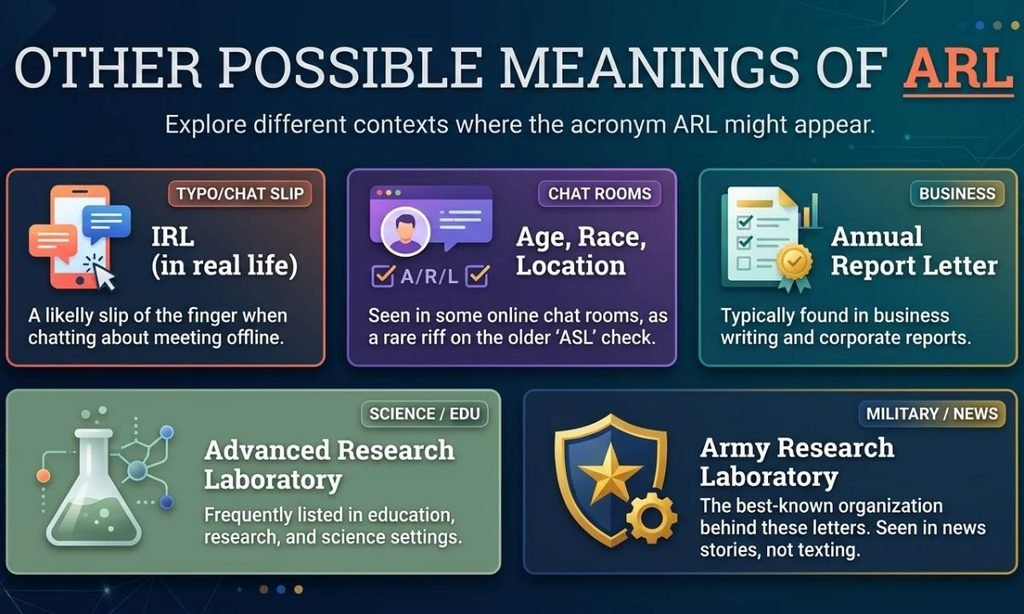
Alternative meanings exist, and context decides between them. In casual chat, ARL means “alright” far more often than anything else. But the same three letters stand in for different phrases elsewhere, usually specialized terms.
- IRL (in real life). A likely slip when the chat is about meeting offline.
- Age, Race, Location. I’ve seen this in some online chat rooms, as a riff on the older “ASL” check. I can’t point to a firm source for it, so treat it as a rare claim.
- Annual Report Letter. A few lists give this one in business writing.
- Advanced Research Laboratory. You may find it listed in education or science settings.
- Army Research Laboratory. The best-known organization behind these letters. You’ll meet it in news stories, not in texting.
So what does ARL mean in text when you run into it in a chat? Look at the conversation. If the surrounding messages sound like texting and casual chat, go with the most common texting meaning. If they sound like education or science, the sender probably means an organization or a term of art. Reading the abbreviation in context solves almost every case.
ARL vs Similar Texting Terms
ARL has plenty of look-alikes. This table shows how it compares with other short codes and agreement words.
| Term | Stands for | Quick meaning | Tone |
| ARL | Usually a typo of ALR | Alright, casual agreement | Casual |
| ALR | Alright or already | Okay | Casual |
| IRL | In real life | Offline, face to face | Casual |
| OK | Okay | General acceptance | Neutral |
| K | Okay | Very short response | Neutral, can feel cold |
| KK | Okay okay | Friendly confirmation | Casual |
| Yup | Yes | Casual yes | Casual |
| Gotcha | I understand | Acknowledgment | Casual |
| AIGHT | Alright | Okay, cool | Casual |
| BET | Agreement slang | Okay, deal | Casual |
| OMW | On my way | I’m coming | Casual |
The pairs that cause the most confusion are easy to sort out.
ARL vs ALR. Same letters, but ALR is the real slang, so ARL is the slip.
ARL vs IRL. IRL separates online life from offline life. If the chat is about meeting in person, “irl” fits better.
ARL vs OK. OK is the plain, neutral choice that works anywhere. ARL feels more relaxed and playful. A short “ok” can feel cold, while “alr” often feels softer.
ARL vs K. K is the briefest reply possible and can read as cold. ARL has a softer edge.
ARL vs KK. It comes down to enthusiasm, since KK sounds like a friendly nod.
ARL vs Yup. Yup answers a question, and ARL accepts a plan.
ARL vs Gotcha. Gotcha says “I understand,” while ARL says “fine by me.” One shows comprehension and the other shows agreement.
ARL vs BET. Both can show agreement, but “bet” sounds confident and trendy, while “alr” sounds calmer.
Strictly speaking, none of these has a rulebook. They’re similar abbreviations with similar meanings, and the real difference between them is tone.
Which Abbreviation Should You Use?
It depends on what you’re confirming. For plain confirming, OK is the safest pick, and it works everywhere. For confirming understanding after an instruction, Gotcha fits better. KK suits a friendly tone with people you text daily.
The question I hear most is “ARL or OK?” My answer: use ARL with friends and casual contacts, and use OK in most situations where you’re unsure who’s reading. If you want to sound relaxed without risking confusion, “alr” or the full word “alright” is the better choice, since ARL is rare and many readers may not recognize it.
When to use ARL is really a question of audience.
When Should You Use ARL?
ARL works best in informal conversations where nobody is keeping score. Friends are the obvious audience, but family members, classmates, gaming teammates and online communities all fit. Those are the good situations: natural, casual and relaxed.
A few everyday examples:
- A friend writes “See you tomorrow,” and you answer “arl.”
- A classmate says “I’ll send the photos tonight,” and you reply “arl, thanks.”
- A group chat asks a quick question, and you confirm in one word.
- A parent sets a time, and you agree with “arl 👍.”
When you’re talking to someone who writes the way you do, short replies make conversations feel natural. Use ARL with friends, keep it for casual texting, and it will do exactly what you want. The golden rule is to match your audience. If the other person writes in full sentences, do the same.
When You Should Avoid ARL

Skip it anywhere that needs to look polished. ARL in professional emails is a bad idea, and ARL at work is risky unless your team chat is very loose. Job applications and formal business messages fall in the same bucket. Like most slang, ARL is informal, and it can look too casual or unprofessional in those settings.
There’s a practical reason too. Many readers may not recognize it at all. A full word is clear and complete, and it avoids confusion.
Here’s a workplace mistake I’ve seen play out. Someone answers a manager’s scheduling question with “arl,” and the manager has no idea whether it means yes, no or a typo. A thirty-second follow-up message fixes it, but the whole thing was avoidable.
Think twice before using it in these situations:
- Emails to your boss, clients or teachers
- Job applications and other formal messages
- Messages to older relatives who may not know text slang
- Serious or sensitive conversations
- Any time a clear answer really matters
In emails and messages about a job, a business deal or an application, write “Alright,” “Understood” or “Sounds good” instead. These professional alternatives cost you two seconds. It’s also worth steering clear of internet abbreviations altogether when a misread reply could cost you something. When a message matters, the full word is never wrong. “Alright, that works” beats a guess every time.
What Your Short Reply Says About Your Tone
A short reply can sound different to each reader. “alr” with a smiley feels friendly, while the same word with a full stop feels distant. One-word replies can also seem cold if you normally write long messages, so don’t assume brevity is always neutral.
When the chat matters, add a small touch of warmth. A simple “alr, thanks!” or a thumbs-up can change the whole mood and keep the conversation smooth. It takes two seconds. Punctuation and emoji carry more of the message than the letters do.
Is ARL Positive or Negative?
Generally, it’s neutral to positive. The tone leans toward agreement, understanding, acceptance and cooperation, so as a positive abbreviation it’s hard to beat.
It rarely carries anger, frustration or negativity, and it’s not typically used to express those. Tone can still shift, though. A lone “arl.” with a full stop can feel flat, while “arl 😊” feels warm. The word itself is usually fine, and the packaging around it changes the mood.
As for whether it’s rude, the answer is no. Most people read it as relaxed. The only risk is that a very short reply can feel cold, so add a smiley if you’re worried. It also doesn’t matter whether a girl or a guy sends it. Gender doesn’t change the meaning, so check the tone and the chat instead.
Is ARL Popular Among Younger Users?
Probably more than among older users, since younger internet users tend to invent and spread this kind of shorthand. But I can’t cite numbers, and usage by age is hard to measure.
What I can say is that ARL isn’t as widespread as LOL, OMG, TBH, IDK or BRB. Comparing it with LOL isn’t a fair fight at all.
Popularity varies by region, friend group and online community. In one group it’s everywhere, and in another nobody has seen it. Terms like ARL live in pockets, so don’t assume someone’s age predicts whether they’ll understand it.
Common Misunderstandings About ARL
Because it’s rare, people often guess wrong. These are the mistakes to avoid.
Mistake 1: Assuming It Always Means One Thing
ARL usually means “alright,” but the multiple meanings are real. Someone in a chat community may read it as Age, Race, Location, and context matters more than any list. It’s the best guess, not a rule. When you aren’t sure, ask. Clarification takes five seconds.
Mistake 2: Using It Professionally
This is the one that stings. Writing ARL to a manager can feel inappropriate at work, even if you meant nothing by it. Texting habits that work among friends don’t always carry over to the office. If coworkers use slang in your team chat, it can be fine, but the safer move is a full word.
Mistake 3: Thinking Everyone Knows It
ARL isn’t in the same tier as LOL, BRB, BTW or IMO, which nearly everyone recognizes. It’s one of those less common abbreviations that’s clear in some chat communities and baffling in others. If you’ve ever wondered about a similar one, our guide to the PWHP meaning in text shows how context changes what a short code means. People end up assuming meaning when they really need clarification. Treat it as local slang, not shared vocabulary.
A Few More Myths
Some other beliefs are worth clearing up:
- “It’s a famous slang word.” Not really. Slang lists and websites usually feature ALR instead.
- “It’s always a typo.” Usually, yes, but groups keep their own slang, so some people use it on purpose.
- “It means a little respect.” A few websites list this for ALR, but the use is very rare, and I wouldn’t rely on it.
- “It means the same everywhere.” Slang changes by group, age and region, so the same word can mean different things to different people.
All of these myths share one cause: people assume instead of checking, and slang variation does the rest.
How to Reply When Someone Sends You ARL
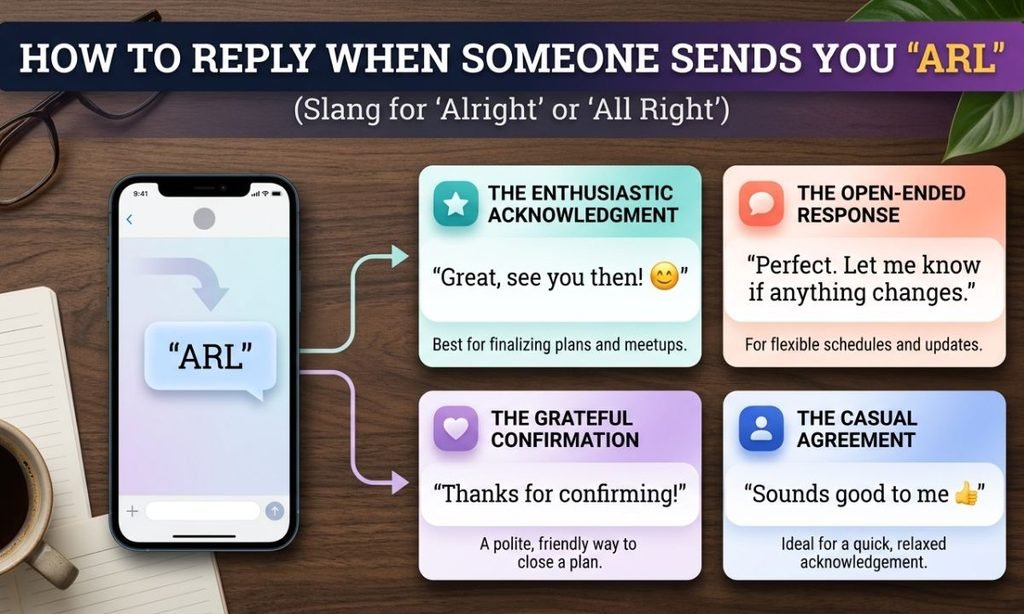
You don’t need a special response. ARL usually means the conversation can continue normally, and it doesn’t require a long reply. A short, kind answer works best.
How you reply depends on what came before it. If a friend is confirming a plan, any of these work:
- “Great, see you then! 😊”
- “Perfect. Let me know if anything changes.”
- “Thanks for confirming!”
- “Sounds good to me 👍”
If the message seems odd, send “Wait, did you mean alright? Just checking 😄.” After that, the conversation picks up again as before.
If the reply feels cold, don’t jump to conclusions. Ask a quick “Everything okay?” instead. That clears things up in seconds and shows good manners. Let the bond with the sender and the mood of the chat guide your emoji choice.
Pro Tips for Reading and Using ARL
These habits help you decode the word fast and reply with confidence.
- Read the message before it. If it was a question or a plan, “arl” most likely means “alright.”
- Test for a typo. Swap the letters in your head. “Alr” and “irl” are the two best candidates.
- Check the sender. A close friend may use slang freely. A teacher or boss probably won’t.
- Watch the tone. Emojis and punctuation tell you a lot, from a smiley to a lone full stop.
- Ask when you’re unsure. “Do you mean alright?” takes five seconds and avoids a bigger mix-up.
- Use the clear version yourself. Type “alr” or “alright” so nobody has to guess.
- Don’t overthink it. Most short replies are harmless, and typing in a hurry causes most of the confusion.
A few habits for your own messages too. Keep it casual and understand the context before you type it. Don’t overuse it, because a message packed with abbreviations is hard to read. Know your audience, stick to relaxed conversations, and use complete words when a message matters. If a reader might find it difficult to understand, they probably won’t recognize the abbreviation either. When in doubt, type “alright.”
Test Yourself: Decode These ARL Messages
Read each message, guess the meaning, then check the answer.
Message 1: “Pick you up at 5?” / “arl, I’ll be ready.”
Answer: Alright. The sender agrees to the plan.
Message 2: “Do you two know each other arl?”
Answer: Probably “in real life.” The question is about meeting offline.
Message 3: “ARL published a new technical report.”
Answer: An organization name. This reads like a news line, not slang.
Did you get all three? Then you already know the answer to what does ARL mean in text. The trick is reading the clues around the letters.
Final Thoughts on What ARL Means in Text
So, what does ARL mean in text? Most of the time, it’s a quick typo of ALR, which means “alright,” a friendly way to say okay. Sometimes it’s a slip for “irl,” and in the news it can be an organization name.
The secret is context: what came before, who sent it, and how it sounds. Those clues solve nearly every case. Next time “arl” lands in your inbox, you won’t feel lost. You’ll know what it likely means, how to reply, and what to type yourself.
For friends and casual chats, keep ARL or ALR in your toolkit. For work, school and anything formal, the full word is the safer choice. Three little letters, and now you know exactly what to do with them.
FAQs
What does ARL mean in text?
ARL most commonly stands for “Are.” It’s a quick shorthand used in texting and social media, often in phrases like “ARL you coming?” Context usually makes the meaning clear.
What does ARL stand for in texting and social media?
In casual chats, ARL is usually a shortened form of “are.” Some people also use it as a typo or abbreviation for “Are you really?” depending on the conversation. Check the surrounding message to be sure.
Is ARL slang for “are”?
Yes, in most informal messages ARL is a shorthand for “are.” It saves typing time, much like “u” for “you” or “r” for “are.” It’s more common in fast, casual texting than in formal writing.
What does ARL mean in a text from a girl or guy?
It usually has the same meaning as in any other text: a shortened “are.” Read it alongside the rest of the sentence, since tone and context matter more than who sent it. If it still seems unclear, simply ask what they meant.
What does ARL mean on Snapchat, Instagram, or TikTok?
On social platforms, ARL generally appears as casual shorthand for “are,” especially in captions, comments, and DMs. It isn’t a widely standardized slang term like “LOL” or “BRB.” The meaning depends on how the poster or sender uses it.
Can ARL mean something else besides “are”?
Yes. Outside texting, ARL can stand for terms such as Army Research Laboratory, Annual Reporting Line, or Airport Radar Locator, depending on the field. In a casual text, though, “are” is the most likely meaning.
How do I know which meaning of ARL someone is using?
Look at the sentence structure and the setting. If it fits where a verb like “are” would go, that’s your answer. If it’s still confusing, a quick follow-up question clears it up.
Is ARL a common texting abbreviation?
No, it’s less common than popular abbreviations like LOL, OMG, or BTW. Many people use it only occasionally or in specific friend groups. If you see it, it may be a personal shorthand or a typo.
Should I use ARL in professional messages?
It’s best to avoid it in work emails, formal messages, or business chats. Write out “are” in full to keep your message clear and professional. Save abbreviations like ARL for casual conversations with friends.
How do I reply when someone texts me ARL?
Respond to the full message, not just the abbreviation. If the meaning isn’t clear, reply with something like “Sorry, what do you mean by ARL?” It’s a simple way to avoid confusion.
