

You’re texting a friend, waiting for them to show up, and their reply pops up on your screen: “otw.” No capital letters. No punctuation. Just three lowercase letters that somehow tell you everything you need to know.
If you’ve ever paused for even half a second wondering what that meant, you’re not alone. Millions of people search for this exact phrase every month, and honestly, it’s one of those texting abbreviations that seems obvious once you know it — but genuinely confusing the first time you see it.
So let’s clear it up. This guide covers the OTW meaning in text, where it came from, how people actually use it in real conversations, and the small details that separate a natural texter from someone who clearly just learned the term five minutes ago.
What Does OTW Mean?
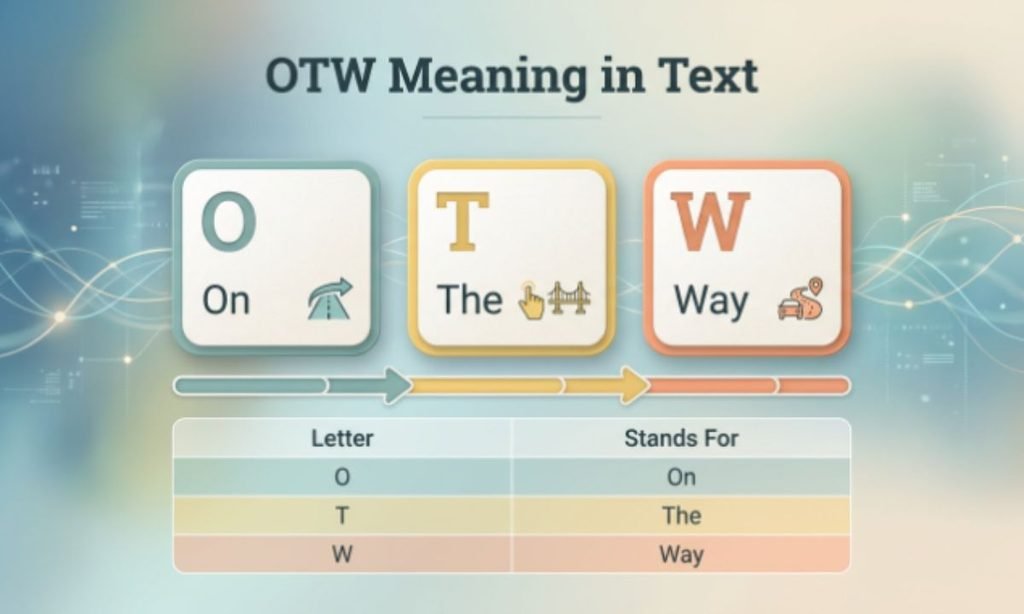
OTW stands for “on the way.” That’s it. That’s the whole thing.
When someone texts you “otw,” they’re telling you they’ve left wherever they were and are currently heading to meet you, get somewhere, or complete some kind of trip. It’s a status update, plain and simple — a quick way of saying “I’m coming” without typing out the full sentence.
Here’s the basic breakdown:
| Letter | Stands For |
| O | On |
| T | The |
| W | Way |
So when someone asks “what does otw mean,” the short answer is always the same: it means the person is currently traveling toward a destination, whether that’s your house, a restaurant, work, or anywhere else.
It’s worth noting that OTW doesn’t tell you how far someone is. It just confirms movement has started. Someone could be five minutes away or forty-five minutes away — “otw” covers both.
OTW Meaning in Text: The Full Picture
Now, here’s where it gets interesting. In casual texting, otw meaning in text goes slightly beyond the dictionary definition of “on the way.” It also carries a bit of tone and intent depending on how it’s used.
In most everyday conversations, otw is used to:
- Confirm you’re leaving right now
- Reassure someone you haven’t forgotten or bailed
- Give a quick update without a long explanation
- Signal urgency (sometimes paired with “hurry” or timing details)
For example, if a friend texts “where are you,” replying with just “otw” answers the question completely. No further explanation needed. That’s really the appeal of the abbreviation — it does a lot of communicating with very little typing.
Common Ways People Use OTW in a Sentence
Understanding the otw meaning in text is easier when you see it in context. Here are some natural, everyday examples:
- “Sorry I’m late, otw now!”
- “Leaving work, otw to your place.”
- “otw, be there in 10.”
- “He said he’s otw, so we should wait.”
- “Almost otw, just grabbing my keys.”
Notice how flexible the phrase is. It works as a standalone reply, part of a longer sentence, or even a heads-up before someone has actually left (“almost otw”).
Where Did OTW Come From?
Text abbreviations like OTW didn’t appear out of nowhere. They grew out of a very practical need: early mobile phones had tiny keyboards, limited character counts, and painfully slow typing speeds compared to what we’re used to today.
Back when SMS messages were capped at 160 characters, and every keystroke on a numeric keypad took effort, shortening common phrases became second nature. “On the way” turning into “otw” saved time, thumb movement, and character space all at once.
Even though smartphones with full keyboards eventually made typing faster, the abbreviation stuck around. Why? Because speed isn’t the only reason people use texting shorthand anymore — it’s also about tone. Typing “otw” instead of “I am currently on my way to meet you” feels more casual, more natural, and honestly more in line with how people actually talk to friends and family.
OTW in Text, Chat, and Social Media
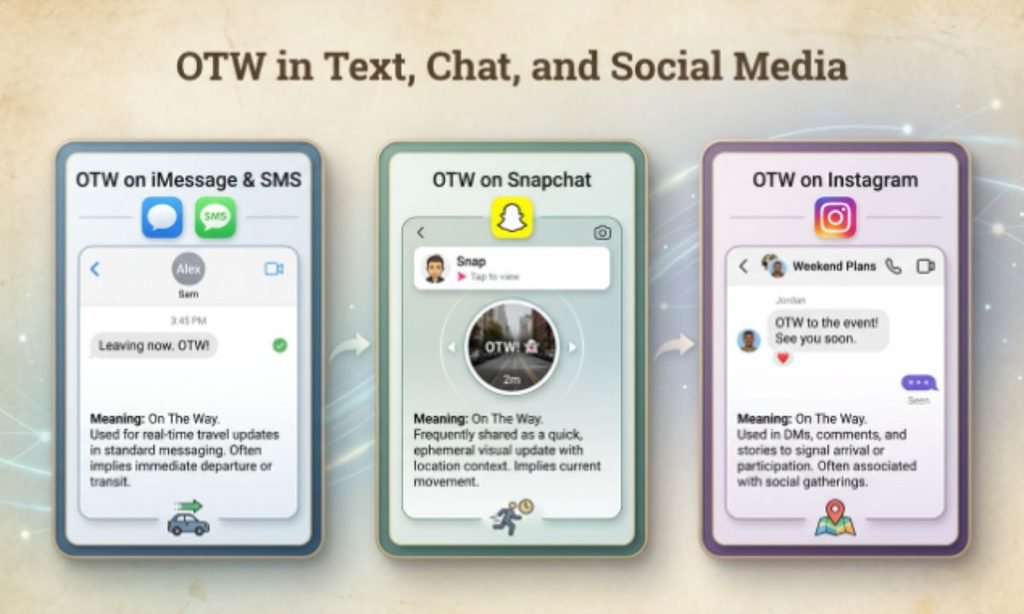
The otw meaning in text stays consistent across platforms, but how it’s used can shift slightly depending on where you see it.
OTW on iMessage and SMS
This is the most traditional use case. Someone texts “otw” to update you on their location status in real time, usually in response to a direct question like “where are you” or “are you close.”
OTW on Snapchat
On Snapchat, otw shows up in chats the same way it does in texts, but you’ll also see it used in captions on Snaps — for example, a picture taken from inside a car with the caption “otw to the beach.” It’s less about answering a question and more about narrating what’s currently happening.
OTW on Instagram
On Instagram, especially in DMs or story replies, otw functions almost identically to Snapchat. You might see it in a story caption (“otw to see this movie everyone’s talking about”) or as a quick reply in someone’s DMs when asked about their plans.
If you’re interested in another common texting abbreviation, you can also check out HYB meaning in text to see how that acronym is used in everyday conversations.
Across all of these platforms, the core otw meaning in text doesn’t change. What shifts is the context — sometimes it’s a direct answer, and sometimes it’s more of a casual narration of what someone’s doing in the moment.
Is OTW Formal or Casual?
This one matters more than people think. OTW is strictly casual. It belongs in texts to friends, family, and people you already have an easy, informal relationship with.
Here’s a simple way to think about it:
| Situation | Should You Use OTW? |
| Texting a close friend | Yes |
| Group chat with family | Yes |
| Texting your boss | No — say “on my way” instead |
| Professional email | No |
| Customer service chat | No |
| Texting a new acquaintance | Depends on the relationship, but usually better to spell it out |
If you’re unsure whether a text abbreviation fits the situation, a good rule of thumb is this: if you wouldn’t say “otw” out loud in that setting, don’t type it either. Professional and semi-formal communication almost always calls for the full phrase, “I’m on my way.”
OTW Slang: How Casual Is It, Really?
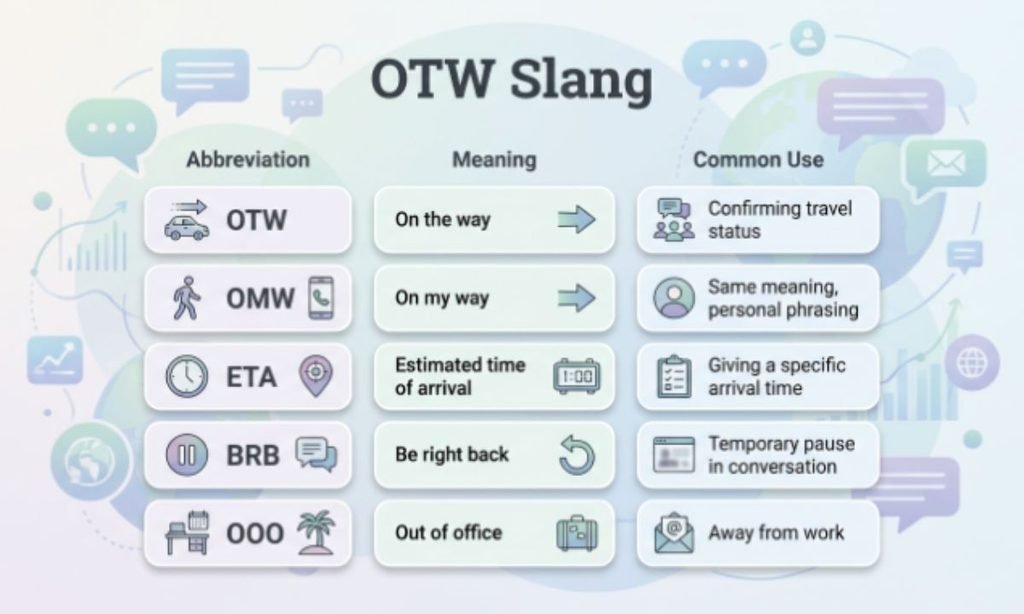
When people search for “otw slang” or “what does otw mean in slang,” they’re usually trying to figure out if it’s just texting shorthand or something with a deeper cultural meaning. The honest answer: it’s mostly just shorthand.
Unlike some slang terms that carry hidden meanings or shift depending on who’s using them, otw is refreshingly straightforward. There’s no secret second meaning, no sarcastic undertone, no generational gap in usage. A teenager and a forty-year-old parent both use “otw” to mean exactly the same thing.
That said, there are a few close cousins worth knowing, since they often show up in similar contexts:
| Abbreviation | Meaning | Common Use | Tone |
| OTW | On the way | Confirming travel status | Casual, neutral |
| OMW | On my way | Same meaning, personal phrasing | Casual, neutral |
| ETA | Estimated time of arrival | Giving a specific arrival time | Casual to semi-formal |
| BRB | Be right back | Temporary pause in conversation | Casual |
| OOO | Out of office | Away from work | Professional |
You’ll notice OTW and OMW are nearly identical in meaning. The difference is subtle: OTW is more general (“someone is on the way”), while OMW is specifically first-person (“I am on my way”). In practice, though, most people use them interchangeably.
Real Text Message Examples
Sometimes the easiest way to understand a phrase is to see how a real conversation flows around it. Here are a few realistic exchanges:
Example 1: Meeting up with a friend
Sam: hey where are you at Jordan: otw, traffic is kinda bad tho Sam: no worries take your time
Example 2: Family dinner
Mom: dinner’s almost ready, you close? You: yeah otw, 5 mins away
Example 3: Group chat coordination
Alex: is everyone here yet Casey: I’m here Riley: otw!! Jamie: same, otw
Example 4: Slightly urgent situation
Taylor: we need to leave in 10 min Morgan: okay omw… I mean otw lol, literally walking out the door
These examples show something important: otw rarely appears in isolation. It’s almost always part of a bigger, quick-moving conversation, which is exactly why it works so well as shorthand. Nobody wants to type a full paragraph when they’re already halfway out the door.
Common Questions People Get Wrong About OTW
There’s a small handful of misunderstandings that come up again and again, so let’s address them directly.
Mixing up OTW with “at work.” Some people mistakenly assume OTW could mean “on the work” or refer to being at your job. It doesn’t. The “W” in OTW always stands for “way,” not “work.”
Assuming OTW gives a specific time. OTW tells you someone has started moving, not when they’ll arrive. If timing matters, look for it to be paired with something like “otw, eta 15 min.”
Using OTW before actually leaving. This one’s more of an etiquette issue than a definition issue, but it’s common enough to mention. Texting “otw” while you’re still finding your shoes and haven’t left the house yet is a classic (and pretty universally recognized) exaggeration. Most people do it anyway — just know that your friends probably know too.
Why Texting Abbreviations Like OTW Matter
It might seem like a small thing, but understanding phrases like this actually says a lot about how digital communication has evolved. We’ve moved from full sentences to compressed, efficient shorthand that still gets the point across clearly.
OTW is a good example of “successful” texting slang because:
- It’s short and easy to type
- It has one clear meaning, with no confusing alternate interpretations
- It works across age groups and platforms
- It fits naturally into fast-paced, real-time conversations
Compare that to slang terms that fade out after a year or two, or ones that only make sense within a specific online community. OTW has stuck around because it’s genuinely useful — not just trendy.
How to Respond When Someone Texts You OTW
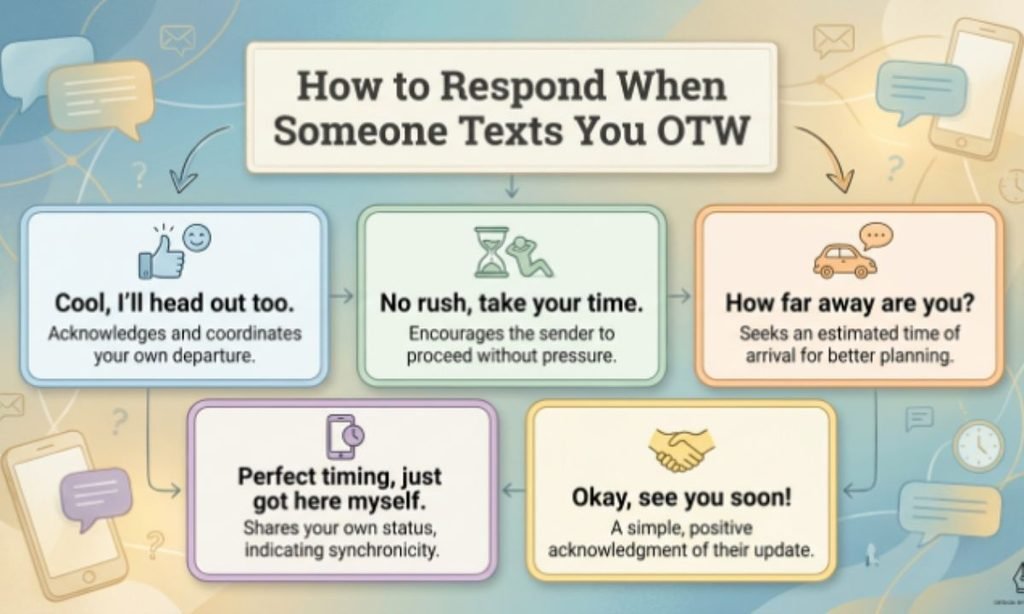
If someone tells you they’re otw, there are a few natural ways to reply depending on the situation:
- “Okay, see you soon!”
- “No rush, take your time.”
- “Cool, I’ll head out too.”
- “How far away are you?”
- “Perfect timing, just got here myself.”
There’s no wrong way to respond, honestly. The phrase is simple enough that it doesn’t require a specific reply format — just react the way you naturally would if someone said “I’m coming” out loud.
Quick Recap: OTW at a Glance
Before wrapping up, here’s a simple summary table covering everything discussed:
| Question | Answer |
| What does OTW stand for? | On the way |
| Is OTW formal or casual? | Casual only |
| Does OTW mean the same as OMW? | Nearly identical, OMW is first-person |
| Can OTW be used on Snapchat and Instagram? | Yes, same meaning across platforms |
| Does OTW include a specific time? | No, just confirms movement has started |
| Is OTW appropriate for work emails? | No, spell it out instead |
Final Thoughts
At the end of the day, the otw meaning in text is about as simple as texting slang gets: it means someone is on the way. No hidden meaning, no confusing exceptions, no generational divide in how it’s used.
What makes it worth understanding isn’t complexity — it’s how naturally it fits into everyday conversation. Whether you’re coordinating plans with friends, letting your family know dinner won’t be missed, or replying to a quick “where are you” text, “otw” gets the job done in three simple letters.
Next time you see it pop up on your screen, you’ll know exactly what it means — and maybe you’ll find yourself typing it back without even thinking twice.
FAQs
What does OTW mean in text?
OTW means “on the way.” People use it to let someone know they’ve already left and are currently heading to a specific location, like a friend’s house or a meetup spot.
What is the full form of OTW?
The full form of OTW is “on the way.” Each letter stands for one word in that phrase: O for “on,” T for “the,” and W for “way.”
Is OTW the same as OMW?
OTW and OMW are almost the same, but OMW specifically means “on my way,” making it first-person. OTW is more general and can refer to anyone who’s currently traveling somewhere.
What does OTW mean on Snapchat?
On Snapchat, OTW carries the same meaning as in regular texting — someone is on their way somewhere. It’s often used as a caption on Snaps taken while traveling, like from a car or bus.
What does OTW mean on Instagram?
OTW on Instagram means the same thing: “on the way.” You’ll typically see it in DMs answering a location question, or in story captions describing a current trip somewhere.
What does OTW mean in chat or messaging apps?
In chat apps, OTW is used to give a quick travel update without typing a full sentence. It’s common in group chats when people are coordinating a meetup and confirming who’s already left.
Does OTW mean someone will arrive soon?
Not exactly. OTW confirms that someone has started traveling, but it doesn’t give an exact arrival time. If timing matters, people usually add details like “otw, 10 min away.”
Is it okay to text OTW to a boss or coworker?
It’s better to avoid OTW in professional messages. For work-related texts or emails, spelling out “I’m on my way” comes across as more polished and appropriate.
What should I reply when someone texts OTW?
A simple reply works best, like “okay, see you soon” or “no rush, take your time.” Since OTW is casual, there’s no need for a formal or lengthy response.
Is OTW considered slang?
Yes, OTW is texting slang, but it’s straightforward slang with one clear meaning. Unlike some slang terms, it doesn’t change meaning based on context or who’s using it.
